Product Description
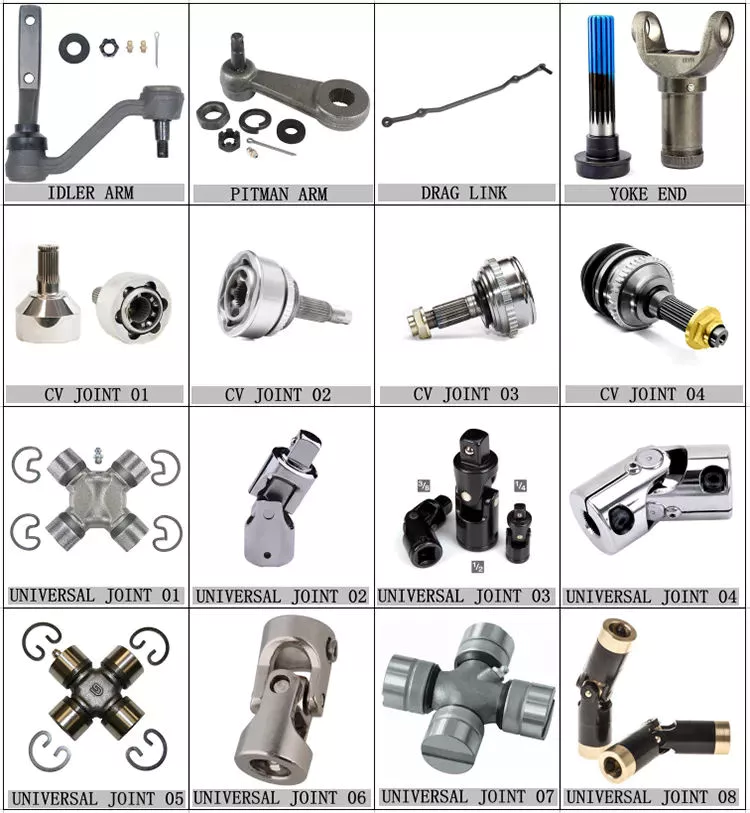
The function of the auto CV JOINT universal joint:
The inner cv joint is connected to the gearbox differential, and the outer ball cage is connected to the wheel. The function of the outer cv joint is the function of the outer cv joint, no matter it is power output or when the vehicle is turning.
What to pay attention to when using the car cv joint dust cover boot:
1. The cv joint plays an important role in the transmission system of the car. It can transmit power from the engine to the wheels, so the cv joint should be well lubricated and dust-proof. Once the cv joint dust cover boot is broken, it needs to be replaced in time. .
2. When there are regular abnormal noises when the car turns or bumps, you can check whether the dust cover boot of the car cv joint is broken, because the dust cover boot of the cv joint is broken, and it is easy for dust to enter and damage the cv joint.
3. If there is no problem with the dust cover boot of the car cv joint, you should go to the auto repair shop to check whether the cv joint is broken by a professional master. If the cv joint is broken, you need to replace it, and it is best to replace the cv joint dust cover boot .
What caused the cv joint to be damaged?
1. The dust cover boot is damaged
The service life of the cv joint is closely related to the dust cover. The dust cover boot can effectively protect the internal grease of the cv joint from being polluted by the outside and being lost to the outside. Once the dust cover is damaged, if it is not discovered by the car owner in time, it will cause the inside of the cv joint to be polluted by sand, stones and muddy water from the outside, and it will be damaged quickly.
2. Long-term wading into water
In some models, the small clips of the dust jackets are not tightened very strongly. It can meet the daily splash waterproof, but if the water is too deep for a long time, it is easy to cause water to enter the cv joint. It is not easy for the car owner to find out after the water enters, which will lead to wear and tear inside the cv joint.
HDAG brand CV JOINTS joint universel FEATURE:
1. Bell-shaped shell: CF53 ball cage special steel or 55# steel, after forging 3160 3163 NIVA VAZ samara moskvich 2141 Tavria 1102 GRANTA LARGUS Vesta X-Ray Kalina PRIORA BA3 Granta Kalina Priora OKA VESTA Gazelle Gazelle Gazel Gazon Kamaz Patriot
TOYOTA :
TOYOTA :
TOYOTA : 4342
TOYOTA : 4342
TOYOTA : 4342R20
TOYOTA : 4346R30
TOYOTA : 4346S50
TOYOTA : 4346
TOYOTA : 4347S60
TOYOTA : 4347U90
TOYOTA :
TOYOTA :
TOYOTA : 434708Z033
TOYOTA : 434708Z037
NISSAN : 391571JJ10
NISSAN : 39157117JJ10
NISSAN : 3910110JJ10
NISSAN : 391Y10
NISSAN : 391M570
NISSAN : 391N215
NISSAN : 391571M311
NISSAN : 391571M915
NISSAN : 3910140Y10
NISSAN : 391014M570
NISSAN : 391014M575
NISSAN : 391014M771
NISSAN : 3910163Y10
NISSAN : 391016N215
NISSAN : 391J171
NISSAN : 391N275
NISSAN : 391J071
NISSAN : 391J915
NISSAN : 391E478
NISSAN : 391012J215
NISSAN : 391014N175
NISSAN : 391014N177
NISSAN : 391014N275
NISSAN : 391015J571
NISSAN : 391016J571
NISSAN : 391016J071
NISSAN : 391016J076
NISSAN : 391016J915
NISSAN : 39101AE415
NISSAN : 39101AU415
NISSAN : 39101AU416
NISSAN : 39101AW110
NISSAN : 39101CX116
NISSAN : 39101WF715
NISSAN : 39101WF716
TOYOTA : 4347Z035
TOYOTA : 434708Z039
VAG :
,96396134,512395
NISSAN : 391V70A
NISSAN : 391013U505
NISSAN : 391014V01C
NISSAN : 391014V51A
NISSAN : 391014V70A
NISSAN : 392113U
96348790
VOLVO : 8111304
VOLVO : 86011
VOLVO : 9122833
VOLVO : 9163595
MAZDA : G571550X
MAZDA : G571560X
MAZDA : G565715
OPEL : 374
VAUXHALL : 571
MAZDA : MD1922510
MAZDA : MD1922510A
MAZDA : MD192550X
MAZDA : MD257160XB
OPEL : 374048
OPEL : 374067
OPEL : 37408
OPEL : 374118
OPEL : 374148
OPEL : 374195
OPEL : 90125876
OPEL : 90157212
OPEL : 95718734
OPEL : 9317340
OPEL : 93173430
SAAB : 4242319
NISSAN : 391KD0A
NISSAN : 391019Y015
NISSAN : 39101CNY015
NISSAN : 39211CNHN50
HONDA : 44305S04J60
HONDA : 44305S0A960
HONDA : 44305S0AN60
HONDA : 44305S2H571
HONDA : 44305S2H050
HONDA : 44305S2H950
HONDA : 44305S2H951
HONDA : 44305S2HN50
HONDA : 44305S5AJ50
HONDA : 44305S5AJ60
HONDA : 44305S5AJ61
HONDA : 44305S5AJ62
HONDA : 44305S5C950
HONDA : 44305S5CN50
HONDA : 44305S5CN51
HONDA : 44305S7B950
HONDA : 44305S7C950
HONDA : 44305SOA960
HONDA : 44305SOAN60
HONDA : 44306S0A960
HONDA : 44306S0AN60
HONDA : 44306S2H571
HONDA : 44306S2H950
HONDA : 44306S2H951
HONDA : 44306S5AJ51
HONDA : 44306S5AJ61
HONDA : 44306S5AJ62
HONDA : 44306S5C951
HONDA : 44306S5C952
HONDA : 44306S7B950
HONDA : 44306S7C950
HONDA : 44306SOA960
HONDA : 44306SOAN60
326582
FG02-25-500E
FG02-25-600D
FG02-25-600E
44305-SA2-960
39100ED00A
39101ED00A
39101ED005
44571-SH3-J01,44306-SB2-984
39211-CN000
KIA : 0K558-25-60X
3272.S5
39211-AY125
39101-AX005
39100-AX005
39101-AX000
MAZDA : M 0571 1510A
MAZDA : M 0571 1500C
MAZDA : M 0571 1500D
MAZDA : M 0571 1600A
MAZDA : M 0571 1600B
MAZDA : MD0925500A
MAZDA : MD0925600A
MAZDA : G064-25-600
MAZDA : G564-25-500A
MAZDA : G564-25-600A
MAZDA : G564-25-60X
MAZDA : GR01-25-500
MAZDA : GR01-25-50X
MAZDA : GR01-25-600
MAZDA : GR01-25-60X
MAZDA : GU01-25-500
MAZDA : GU01-25-50XA
MAZDA : GU01-25-50XC
MAZDA : GU01-25-600
MAZDA : GU01-25-60XA
MAZDA : GU01-25-60XD
HONDA : 44014-SNG-000
HONDA : 44305-SDC-A00
HONDA : 44305-SEA-000
HONDA : 44305-SNG-571
HONDA : 44306-SDC-A01
HONDA : 44306-SDE-T00
HONDA : 44306-SEA-000
HONDA : 44306-SNG-571
NISSAN : 39100JD24B
NISSAN : 39100JD52B
NISSAN : 39101JD24B
NISSAN : 39101JD52B
NISSAN : 39211JA00A
NISSAN : 39211JD22B
NISSAN : C9211JA00A
NISSAN : C9211JD22B
NISSAN : C92AAJA00A
NISSAN : C92AAJD22B
NISSAN : C9B11JA00A
NISSAN : C9BAAJA00A
MAZDA : FA8571500A
MAZDA : FA8571600B
MAZDA : FA8125600B
MAZDA : FA8225500A
MAZDA : FD8571500B
MAZDA : FD8571600A
MAZDA : FP0125500C
3272-HY
3272-KW
3273-HQ
3273-KJ
NISSAN : 39100-ED105
NISSAN : 39100-ED305
NISSAN : 39100-ED805
NISSAN : 39101-ED105
NISSAN : 39101-ED305
NISSAN : 39101-ED805
NISSAN : 39211-ED100
NISSAN : C9211-EL10A
KIA : KK38825600
HYUNDAI : 49500-25302
HYUNDAI : 49500-25310
HYUNDAI : 49500-25311
HYUNDAI : 49500-25312
KIA : 49500-25301
KIA : 49500-25302
KIA : 49500-25310
KIA : 49500-25311
KIA : 49500-25312
LAND ROVER : STC3046
40011-M5626
39100-M7270
39101-M7270
39113-M7275
39112-M7225
LAND ROVER : TDJ00571
HYUNDAI : 49500-25400
KIA : 49500-25200
KIA : 49500-25400
LAND ROVER : TDB500110
LAND ROVER : TDJ500030
39101-CA100
39211-CA100
39100-CA100
HONDA : 44305S74E01
HONDA : 44305S74E51
ROVER : GCV1123
ROVER : TFB000070
39211-AY125
39101-AX005
39100-AX005
39101-AX000
CITROEN : 3272TH
CITROEN : 3272WX
CITROEN : 3273QQ
CITROEN : 3273TT
CITROEN : 3273XR
DS : 3272QF
DS : 3272TH
DS : 3273QQ
DS : 3273TT
PEUGEOT : 3272QF
PEUGEOT : 3272TH
PEUGEOT : 3272WX
PEUGEOT : 3273QQ
PEUGEOT : 3273TT
PEUGEOT : 3273XR
39211-CG571
| After-sales Service: | Three Years |
|---|---|
| Condition: | New |
| Color: | OEM Standard |
| Certification: | CE, ISO, ISO/Ts16949 |
| Type: | Universal Joint |
| Application Brand: | Nissan, Iveco, Toyota, Ford, Lada Mitsubishi FIAT Opel Peugeot Renault Citroen |
| Customization: | Available | Customized Request |
|---|
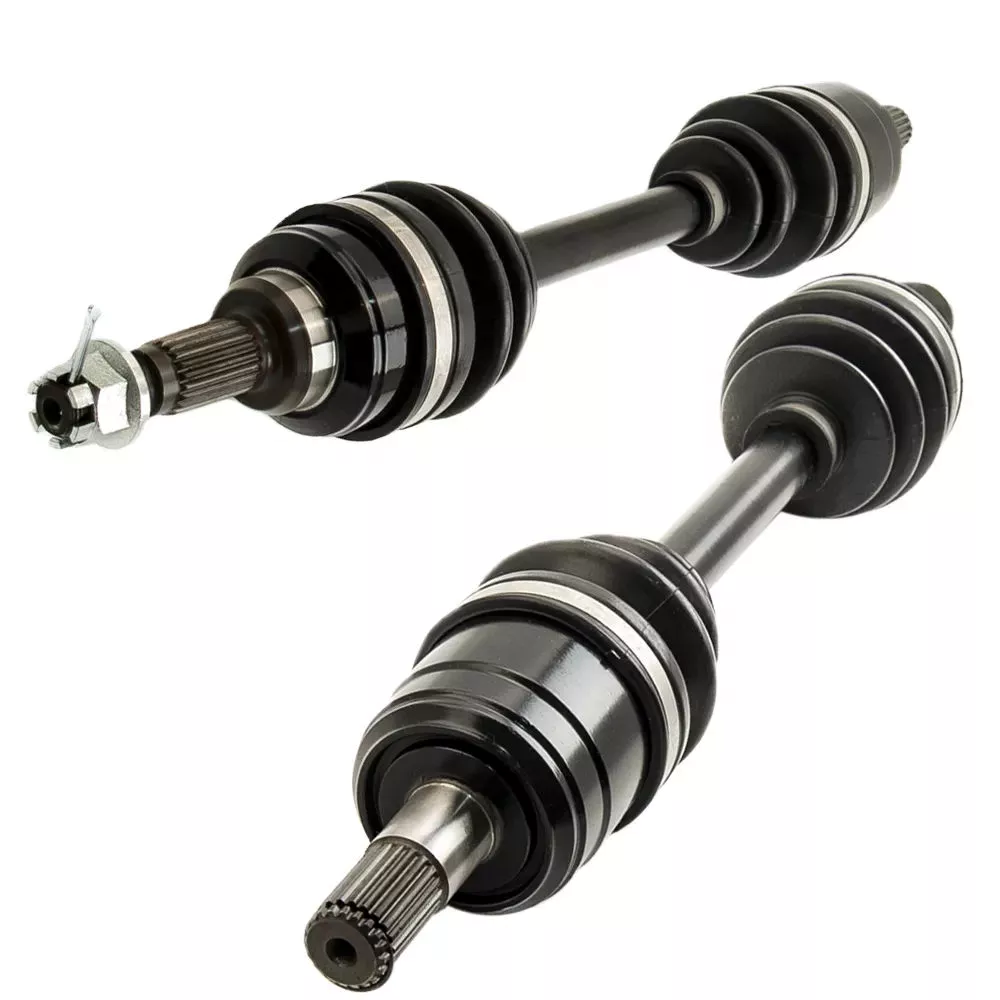
How do drive shafts handle variations in speed and torque during operation?
Drive shafts are designed to handle variations in speed and torque during operation by employing specific mechanisms and configurations. These mechanisms allow the drive shafts to accommodate the changing demands of power transmission while maintaining smooth and efficient operation. Here’s a detailed explanation of how drive shafts handle variations in speed and torque:
1. Flexible Couplings:
Drive shafts often incorporate flexible couplings, such as universal joints (U-joints) or constant velocity (CV) joints, to handle variations in speed and torque. These couplings provide flexibility and allow the drive shaft to transmit power even when the driving and driven components are not perfectly aligned. U-joints consist of two yokes connected by a cross-shaped bearing, allowing for angular movement between the drive shaft sections. This flexibility accommodates variations in speed and torque and compensates for misalignment. CV joints, which are commonly used in automotive drive shafts, maintain a constant velocity of rotation while accommodating changing operating angles. These flexible couplings enable smooth power transmission and reduce vibrations and wear caused by speed and torque variations.
2. Slip Joints:
In some drive shaft designs, slip joints are incorporated to handle variations in length and accommodate changes in distance between the driving and driven components. A slip joint consists of an inner and outer tubular section with splines or a telescoping mechanism. As the drive shaft experiences changes in length due to suspension movement or other factors, the slip joint allows the shaft to extend or compress without affecting the power transmission. By allowing axial movement, slip joints help prevent binding or excessive stress on the drive shaft during variations in speed and torque, ensuring smooth operation.
3. Balancing:
Drive shafts undergo balancing procedures to optimize their performance and minimize vibrations caused by speed and torque variations. Imbalances in the drive shaft can lead to vibrations, which not only affect the comfort of vehicle occupants but also increase wear and tear on the shaft and its associated components. Balancing involves redistributing mass along the drive shaft to achieve even weight distribution, reducing vibrations and improving overall performance. Dynamic balancing, which typically involves adding or removing small weights, ensures that the drive shaft operates smoothly even under varying speeds and torque loads.
4. Material Selection and Design:
The selection of materials and the design of drive shafts play a crucial role in handling variations in speed and torque. Drive shafts are typically made from high-strength materials, such as steel or aluminum alloys, chosen for their ability to withstand the forces and stresses associated with varying operating conditions. The diameter and wall thickness of the drive shaft are also carefully determined to ensure sufficient strength and stiffness. Additionally, the design incorporates considerations for factors such as critical speed, torsional rigidity, and resonance avoidance, which help maintain stability and performance during speed and torque variations.
5. Lubrication:
Proper lubrication is essential for drive shafts to handle variations in speed and torque. Lubricating the joints, such as U-joints or CV joints, reduces friction and heat generated during operation, ensuring smooth movement and minimizing wear. Adequate lubrication also helps prevent the binding of components, allowing the drive shaft to accommodate speed and torque variations more effectively. Regular lubrication maintenance is necessary to ensure optimal performance and extend the lifespan of the drive shaft.
6. System Monitoring:
Monitoring the performance of the drive shaft system is important to identify any issues related to variations in speed and torque. Unusual vibrations, noises, or changes in power transmission can indicate potential problems with the drive shaft. Regular inspections and maintenance checks allow for the early detection and resolution of issues, helping to prevent further damage and ensure the drive shaft continues to handle speed and torque variations effectively.
In summary, drive shafts handle variations in speed and torque during operation through the use of flexible couplings, slip joints, balancing procedures, appropriate material selection and design, lubrication, and system monitoring. These mechanisms and practices allow the drive shaft to accommodate misalignment, changes in length, and variations in power demands, ensuring efficient power transmission, smooth operation, and reduced wear and tear in various applications.
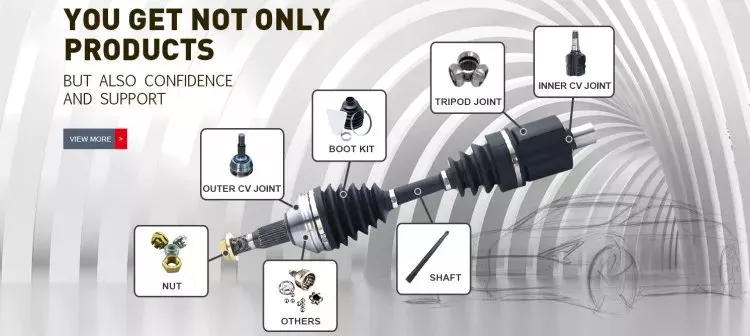
How do drive shafts handle variations in load and vibration during operation?
Drive shafts are designed to handle variations in load and vibration during operation by employing various mechanisms and features. These mechanisms help ensure smooth power transmission, minimize vibrations, and maintain the structural integrity of the drive shaft. Here’s a detailed explanation of how drive shafts handle load and vibration variations:
1. Material Selection and Design:
Drive shafts are typically made from materials with high strength and stiffness, such as steel alloys or composite materials. The material selection and design take into account the anticipated loads and operating conditions of the application. By using appropriate materials and optimizing the design, drive shafts can withstand the expected variations in load without experiencing excessive deflection or deformation.
2. Torque Capacity:
Drive shafts are designed with a specific torque capacity that corresponds to the expected loads. The torque capacity takes into account factors such as the power output of the driving source and the torque requirements of the driven components. By selecting a drive shaft with sufficient torque capacity, variations in load can be accommodated without exceeding the drive shaft’s limits and risking failure or damage.
3. Dynamic Balancing:
During the manufacturing process, drive shafts can undergo dynamic balancing. Imbalances in the drive shaft can result in vibrations during operation. Through the balancing process, weights are strategically added or removed to ensure that the drive shaft spins evenly and minimizes vibrations. Dynamic balancing helps to mitigate the effects of load variations and reduces the potential for excessive vibrations in the drive shaft.
4. Dampers and Vibration Control:
Drive shafts can incorporate dampers or vibration control mechanisms to further minimize vibrations. These devices are typically designed to absorb or dissipate vibrations that may arise from load variations or other factors. Dampers can be in the form of torsional dampers, rubber isolators, or other vibration-absorbing elements strategically placed along the drive shaft. By managing and attenuating vibrations, drive shafts ensure smooth operation and enhance overall system performance.
5. CV Joints:
Constant Velocity (CV) joints are often used in drive shafts to accommodate variations in operating angles and to maintain a constant speed. CV joints allow the drive shaft to transmit power even when the driving and driven components are at different angles. By accommodating variations in operating angles, CV joints help minimize the impact of load variations and reduce potential vibrations that may arise from changes in the driveline geometry.
6. Lubrication and Maintenance:
Proper lubrication and regular maintenance are essential for drive shafts to handle load and vibration variations effectively. Lubrication helps reduce friction between moving parts, minimizing wear and heat generation. Regular maintenance, including inspection and lubrication of joints, ensures that the drive shaft remains in optimal condition, reducing the risk of failure or performance degradation due to load variations.
7. Structural Rigidity:
Drive shafts are designed to have sufficient structural rigidity to resist bending and torsional forces. This rigidity helps maintain the integrity of the drive shaft when subjected to load variations. By minimizing deflection and maintaining structural integrity, the drive shaft can effectively transmit power and handle variations in load without compromising performance or introducing excessive vibrations.
8. Control Systems and Feedback:
In some applications, drive shafts may be equipped with control systems that actively monitor and adjust parameters such as torque, speed, and vibration. These control systems use sensors and feedback mechanisms to detect variations in load or vibrations and make real-time adjustments to optimize performance. By actively managing load variations and vibrations, drive shafts can adapt to changing operating conditions and maintain smooth operation.
In summary, drive shafts handle variations in load and vibration during operation through careful material selection and design, torque capacity considerations, dynamic balancing, integration of dampers and vibration control mechanisms, utilization of CV joints, proper lubrication and maintenance, structural rigidity, and, in some cases, control systems and feedback mechanisms. By incorporating these features and mechanisms, drive shafts ensure reliable and efficient power transmission while minimizing the impact of load variations and vibrations on overall system performance.
How do drive shafts handle variations in length and torque requirements?
Drive shafts are designed to handle variations in length and torque requirements in order to efficiently transmit rotational power. Here’s an explanation of how drive shafts address these variations:
Length Variations:
Drive shafts are available in different lengths to accommodate varying distances between the engine or power source and the driven components. They can be custom-made or purchased in standardized lengths, depending on the specific application. In situations where the distance between the engine and the driven components is longer, multiple drive shafts with appropriate couplings or universal joints can be used to bridge the gap. These additional drive shafts effectively extend the overall length of the power transmission system.
Additionally, some drive shafts are designed with telescopic sections. These sections can be extended or retracted, allowing for adjustments in length to accommodate different vehicle configurations or dynamic movements. Telescopic drive shafts are commonly used in applications where the distance between the engine and the driven components may change, such as in certain types of trucks, buses, and off-road vehicles.
Torque Requirements:
Drive shafts are engineered to handle varying torque requirements based on the power output of the engine or power source and the demands of the driven components. The torque transmitted through the drive shaft depends on factors such as the engine power, load conditions, and the resistance encountered by the driven components.
Manufacturers consider torque requirements when selecting the appropriate materials and dimensions for drive shafts. Drive shafts are typically made from high-strength materials, such as steel or aluminum alloys, to withstand the torque loads without deformation or failure. The diameter, wall thickness, and design of the drive shaft are carefully calculated to ensure it can handle the expected torque without excessive deflection or vibration.
In applications with high torque demands, such as heavy-duty trucks, industrial machinery, or performance vehicles, drive shafts may have additional reinforcements. These reinforcements can include thicker walls, cross-sectional shapes optimized for strength, or composite materials with superior torque-handling capabilities.
Furthermore, drive shafts often incorporate flexible joints, such as universal joints or constant velocity (CV) joints. These joints allow for angular misalignment and compensate for variations in the operating angles between the engine, transmission, and driven components. They also help absorb vibrations and shocks, reducing stress on the drive shaft and enhancing its torque-handling capacity.
In summary, drive shafts handle variations in length and torque requirements through customizable lengths, telescopic sections, appropriate materials and dimensions, and the inclusion of flexible joints. By carefully considering these factors, drive shafts can efficiently and reliably transmit power while accommodating the specific needs of different applications.


editor by CX 2023-10-17