Product Description
We are supply the Atlas drive shafts and components, u-joints and prop-shafts and spider and assembly, pleaes contact us if you have any need.
| Atlas PN |
| 5580014149 |
| 5541171300 |
| 6060001268 |
| 5535437300 |
| 5535542400 |
| 3050138000 |
| 3 0571 11000 |
| 3 0571 16000 |
| 3 0571 1571 |
| 3 0571 100 |
| 3 0571 1000 |
| 5728257142 |
| 2657227787 |
| 5535721000 |
| 5535720800 |
| /5541171300 |
| 5535720900 |
| 5535542400 |
| 5728257141 |
| 5541352200 |
| 5112315711 |
| 5540809400 |
| 5112310920 |
| 5112239684 |
| 571704007 |
| 5535720900 |
| After-sales Service: | One Year |
|---|---|
| Warranty: | One Year |
| Condition: | New |
| Color: | Natural Color |
| Certification: | ISO |
| Structure: | Single |
| Customization: | Available | Customized Request |
|---|
How do you prevent premature wear in a universal joint?
Preventing premature wear in a universal joint is crucial for maintaining its performance, longevity, and reliability. Here’s a detailed explanation:
Several measures can be taken to prevent premature wear in a universal joint:
- Proper Lubrication: Adequate lubrication is essential for reducing friction, dissipating heat, and preventing premature wear in a universal joint. Regularly lubricating the joint with the recommended lubricant, such as grease or oil, helps to create a protective film between the moving parts, minimizing frictional losses and preventing metal-to-metal contact.
- Correct Alignment: Misalignment is a common cause of premature wear in a universal joint. Ensuring proper alignment between the shafts connected by the joint is crucial to distribute the load evenly and prevent excessive stress on the joint’s components. Misalignment can be minimized by using precision alignment techniques and checking the operating angles specified by the manufacturer.
- Appropriate Operating Angles: Universal joints have specified operating angles within which they can operate optimally. Operating the joint beyond these recommended angles can lead to increased wear and reduced lifespan. It is important to adhere to the manufacturer’s guidelines regarding the maximum allowable operating angles to prevent premature wear.
- Regular Maintenance: Implementing a regular maintenance schedule can help identify and address potential issues before they escalate into significant problems. Routine inspections of the universal joint, including checking for signs of wear, corrosion, or damage, can help detect any issues early on and allow for timely repairs or replacements.
- Proper Torque Capacity: Selecting a universal joint with an appropriate torque capacity for the specific application is essential for preventing premature wear. If the joint is subjected to torque levels exceeding its capacity, it can lead to excessive stress, deformation, and wear on the components. Ensuring that the selected joint can handle the expected loads and operating conditions is crucial.
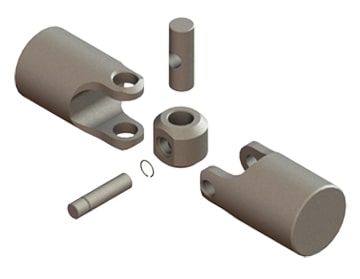
- Quality Components: Using high-quality universal joint components, such as yokes, cross bearings, and needle bearings, can significantly contribute to preventing premature wear. Components made from durable materials with excellent strength and wear resistance properties are more likely to withstand the demanding conditions and provide longer service life.
- Avoiding Overloading: Overloading a universal joint beyond its rated capacity can lead to accelerated wear and failure. It is important to operate the joint within its specified load limits and avoid subjecting it to excessive torque or radial loads. Understanding the application requirements and ensuring that the joint is appropriately sized and rated for the intended load is crucial.
By following these preventive measures, it is possible to minimize premature wear in a universal joint, enhance its durability, and prolong its operational life. Regular maintenance, proper lubrication, correct alignment, and adherence to operating guidelines are key to ensuring optimal performance and preventing premature wear in universal joints.
How does a universal joint affect the overall efficiency of a system?
A universal joint can have an impact on the overall efficiency of a system in several ways. The efficiency of a system refers to its ability to convert input power into useful output power while minimizing losses. Here are some factors that can influence the efficiency of a system when using a universal joint:
- Friction and energy losses: Universal joints introduce friction between their components, such as the cross, bearings, and yokes. This friction results in energy losses in the form of heat, which reduces the overall efficiency of the system. Proper lubrication and maintenance of the universal joint can help minimize friction and associated energy losses.
- Angular misalignment: Universal joints are commonly used to transmit torque between non-aligned or angularly displaced shafts. However, when the input and output shafts are misaligned, it can lead to increased angular deflection, resulting in energy losses due to increased friction and wear. The greater the misalignment, the higher the energy losses, which can affect the overall efficiency of the system.
- Backlash and play: Universal joints can have inherent backlash and play, which refers to the amount of rotational movement that occurs before the joint begins to transmit torque. Backlash and play can lead to decreased efficiency in applications that require precise positioning or motion control. The presence of backlash can cause inefficiencies, especially when reversing rotational direction or during rapid changes in torque direction.
- Mechanical vibrations: Universal joints can generate mechanical vibrations during operation. These vibrations can result from factors such as angular misalignment, imbalance, or variations in joint geometry. Mechanical vibrations not only reduce the efficiency of the system but can also contribute to increased wear, fatigue, and potential failure of the joint or other system components. Vibration damping techniques, proper balancing, and maintenance can help mitigate the negative effects of vibrations on system efficiency.
- Operating speed: The operating speed of a system can also impact the efficiency of a universal joint. At high rotational speeds, the limitations of the joint’s design, such as imbalance, increased friction, or decreased precision, can become more pronounced, leading to reduced efficiency. It’s important to consider the specific speed capabilities and limitations of the universal joint to ensure optimal system efficiency.
Overall, while universal joints are widely used and provide flexibility in transmitting torque between non-aligned shafts, their design characteristics and operational considerations can affect the efficiency of a system. Proper maintenance, lubrication, alignment, and consideration of factors such as misalignment, backlash, vibrations, and operating speed contribute to maximizing the efficiency of the system when utilizing a universal joint.
Are there different types of universal joints available?
Yes, there are different types of universal joints available to suit various applications and requirements. Let’s explore some of the commonly used types:
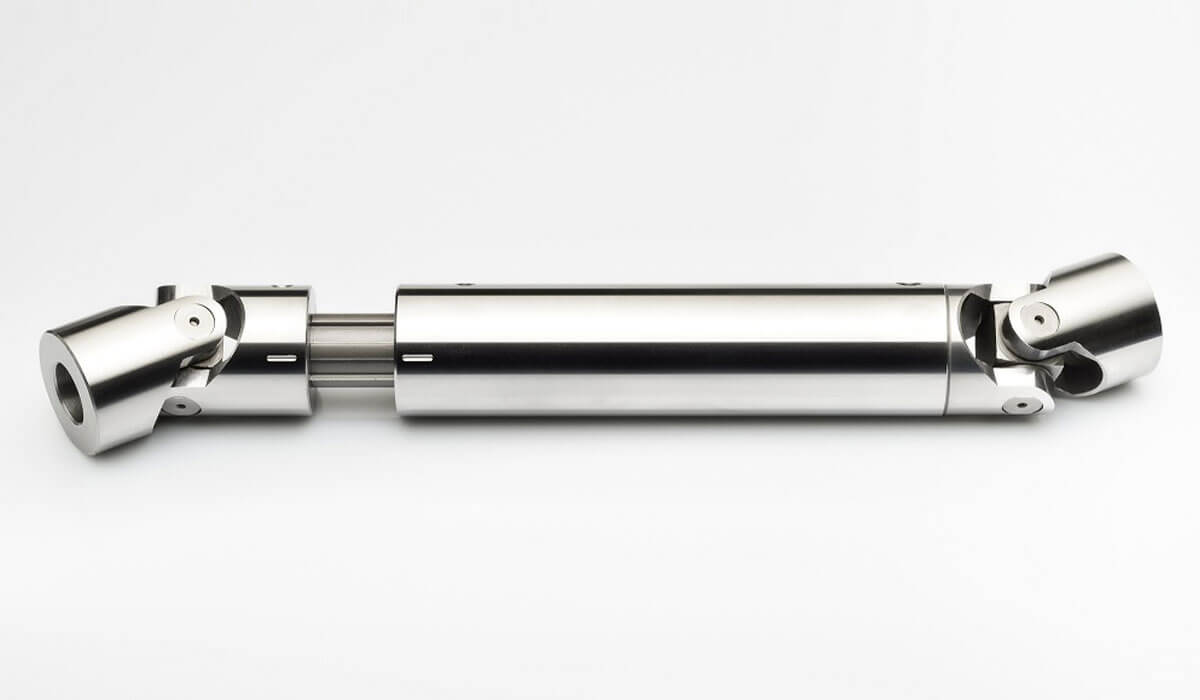
- Single Joint (Cardan Joint): The single joint, also known as a Cardan joint, is the most basic and widely used type of universal joint. It consists of two yokes connected by a cross-shaped center piece. The yokes are typically 90 degrees out of phase with each other, allowing for angular displacement and misalignment between shafts. Single joints are commonly used in automotive drivelines and industrial applications.
- Double Joint: A double joint, also referred to as a double Cardan joint or a constant velocity joint, is an advanced version of the single joint. It consists of two single joints connected in series with an intermediate shaft in between. The use of two joints in series helps to cancel out the velocity fluctuations and reduce vibration caused by the single joint. Double joints are commonly used in automotive applications, especially in front-wheel-drive vehicles, to provide constant velocity power transmission.
- Tracta Joint: The Tracta joint, also known as a tripod joint or a three-roller joint, is a specialized type of universal joint. It consists of three rollers or balls mounted on a spider-shaped center piece. The rollers are housed in a three-lobed cup, allowing for flexibility and articulation. Tracta joints are commonly used in automotive applications, particularly in front-wheel-drive systems, to accommodate high-speed rotation and transmit torque smoothly.
- Rzeppa Joint: The Rzeppa joint is another type of constant velocity joint commonly used in automotive applications. It features six balls positioned in grooves on a central sphere. The balls are held in place by an outer housing with an inner race. Rzeppa joints provide smooth power transmission and reduced vibration, making them suitable for applications where constant velocity is required, such as drive axles in vehicles.
- Thompson Coupling: The Thompson coupling, also known as a tripodal joint, is a specialized type of universal joint. It consists of three interconnected rods with spherical ends. The arrangement allows for flexibility and misalignment compensation. Thompson couplings are often used in applications where high torque transmission is required, such as industrial machinery and power transmission systems.
These are just a few examples of the different types of universal joints available. Each type has its own advantages and is suitable for specific applications based on factors such as torque requirements, speed, angular displacement, and vibration reduction. The selection of the appropriate type of universal joint depends on the specific needs of the application.


editor by CX 2023-12-07