Product Description
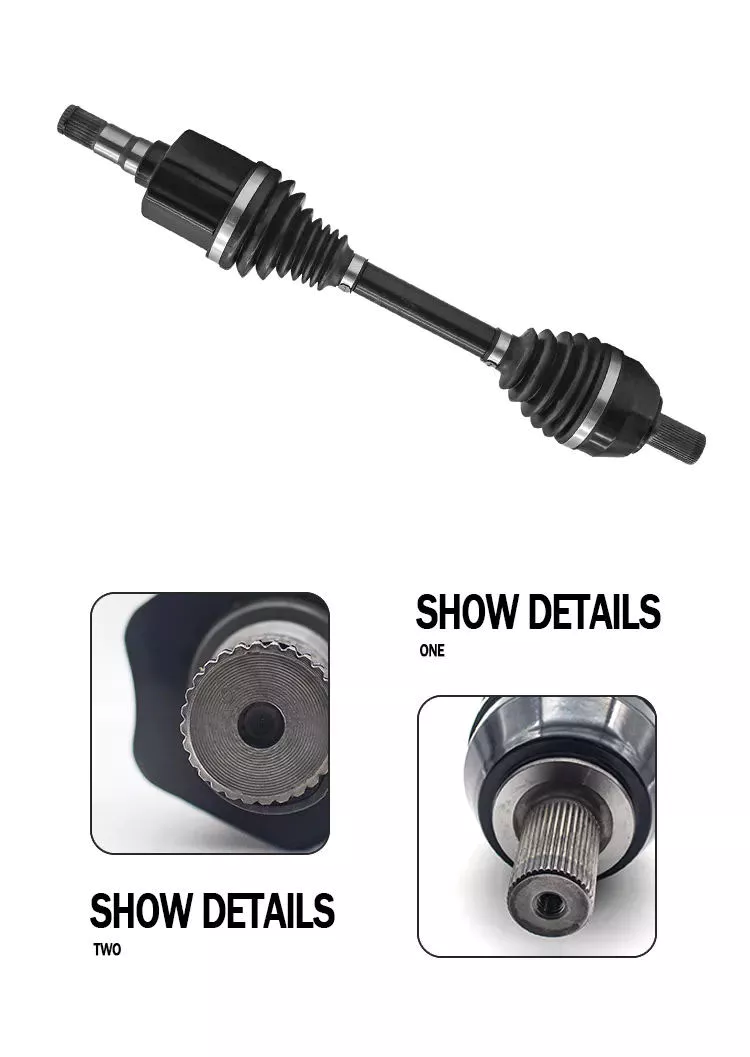
As a professional manufacturer for propeller shaft, we have +800 items for all kinds of car, main suitable
for AMERICA & EUROPE market.
Our advantage:
1. Full range of products
2. MOQ qty: 5pcs/items
3. Delivery on time
4: Warranty: 1 YEAR
5. Develope new items: FREE
Brand Name | KOWA DRIVE SHAFT |
Item name | OEM |
Car maker | For all japanese/korean/european/american car |
Moq | 5pcs |
Guarantee | 12 months |
sample | Available if have stock |
Price | Send inquiry to get lastest price |
BOX/QTY | 1PCS/Bag 4PCS /CTNS |
For some items, we have stock, small order (+3000USD) is welcome.
The following items are some of drive shafts, If you need more information, pls contact us for ASAP.
| For Japanese Car | |||
| for TOYOTA | for TOYOTA | ||
| 43420-57170 | 43420-57180 | 43410-0W081 | 43420-0W080 |
| 43410-57120 | 43420-57190 | 43410-0W091 | 43420-0W090 |
| 43410-57130 | 43420-57120 | 43410-0W100 | 43420-0W110 |
| 43410-57150 | 43420-02B10 | 43410-0W110 | 43420-0W160 |
| 43410-06221 | 43420-02B11 | 43410-0W140 | 43420-32161 |
| 43410-06231 | 43420-02B60 | 43410-0W150 | 43420-33250 |
| 43410-06460 | 43420-02B61 | 43410-0W180 | 43420-33280 |
| 43410-06570 | 43420-02B62 | 43410-12410 | 43420-48090 |
| 43410-06580 | 43420-06221 | 43410-33280 | 43420-48091 |
| 43410-066-90 | 43420-06231 | 43410-33290 | 43430OK571 |
| 43410-06750 | 43420-06460 | 43410-33330 | 66-5245 |
| 43410-06780 | 43420-06490 | 43410-48070 | 66-5247 |
| 43410-06A40 | 43420-06500 | 43410-48071 | 43420-57150 |
| 43410-06A50 | 43420- 0571 0 | 43410-0W061 | 43420-0W061 |
| 43410-07070 | 43420-06610 | 43410-0W071 | 43420-0W071 |
| for Acura | for LEXUS | ||
| 44305STKA00 | 66-4198 | 43410-06200 | 43410-06480 |
| 44305STKA01 | 66-4261 | 43410-06450 | 43410-06560 |
| 44305SZPA00 | 66-4262 | 66-5265 | |
| 44306STKA00 | 66-4270 | for MITSUBISHI | |
| 44306STKA01 | 66-4271 | 3815A309 | 3815A310 |
| 44306SZPA00 | |||
| for Honda | for MAZDA | ||
| 44571S1571 | 44306S3VA61 | 5L8Z3A428AB | GG052550XD |
| 44011S1571 | 44306S3VA62 | 5L8Z3A428DA | GG052560XE |
| 44305S2HN50 | 44306S9VA51 | 66-2090 | GG362550XA |
| 44305SCVA50 | 44306S9VA71 | 6L8Z3A428A | YL8Z3A427AA |
| 44305SCVA51 | 44306SCVA50 | 9L8Z3A427B | YL8Z3A427BA |
| 44305SCVA90 | 44306SCVA51 | GG032550XD | YL8Z3A428AA |
| 44305SCVA91 | 44306SCVA90 | GG042550XD | YL8Z3A428BA |
| 44305STXA02 | 44306SCVA91 | GG042560XG | ZC32550XA |
| 44305SZAA01 | 44306STXA02 | ||
| 44306S2H951 | 44306SZAA01 | ||
| 44306SZAA11 | 44306SZAA01RM | ||
| 44306SZAA12 | 66-4213 | ||
| 66-4214 | |||
| for Europe Car | |||
| for VOLKSWAGEN | for VOLKSWAGEN | ||
| 4885712AD | 7B0407271B | 7E0407271G | 7LA407272C |
| 4885713AF | 7B0407272 | 7E0407271P | 7LA4 0571 2CX |
| 4881214AE | 7B0407272E | 7LA407271E | |
| 7B0407271A | |||
| for America Car | |||
| for CHRYSLER | for MERCURY | ||
| 4593447AA | 557180AD | 4F1Z3B437AA | GG322560X |
| 4641855AA | 52114390AB | 5L8Z3A428DB | GG362560XA |
| 4641855AC | 5273546AC | 66-2249 | YL8Z3A427CA |
| 4641856AA | 66-3108 | 9L8Z3A427C | YL8Z3A427DA |
| 4641856AC | 66-3109 | 9L8Z3A427D | YL8Z3A427EA |
| 4882517 | 66-3130 | GG062550XD | YL8Z3A427FA |
| 4882518 | 66-3131 | GG062560XE | YL8Z3A428CA |
| 4882519 | 66-3234 | GG312560X | ZZDA2560X |
| 4882520 | 66-3518 | ZZDA2560XC | ZZDA2560XA |
| 557130AB | 66-3520 | for RAM | |
| 66-3552 | 66-3522 | 4885713AD | 55719AB |
| 66-3553 | 66-3551 | 4881214AD | 66-3404 |
| 66-3554 | 66-3639 | 55719AA | 66-3740 |
| 68193908AB | 66-3641 | 68571398AA | |
| for FORD | for DODGE | ||
| 1F0571400 | E6DZ3V428AARM | 4593449AA | 7B0407272A |
| 1F0571410 | E8DZ3V427AARM | 4641855AE | 7B0407272B |
| 1F2Z3B436AA | E8DZ3V428AARM | 4641855EE | 7B0407272C |
| 2F1Z3A428CA | E90Y3V427AARM | 4641856AD | R4881214AE |
| 2M5Z3B437CA | E90Y3V428AARM | 4641856AF | RL189279AA |
| 4F1Z3B437BA | F0DZ3V427AARM | 4885710AC | 557180AG |
| 5M6Z3A428AA | F0DZ3V428AARM | 4885710AE | 5170822AA |
| 5S4Z3B437AA | F21Z3B437A | 4885710AF | 52114390AA |
| 66-2005 | F21Z3B437B | 4885710AG | 5273546AD |
| 66-2008 | F2DZ3B436A | 4885711AC | 5273546AE |
| 66-2571 | F2DZ3B436B | 4885711AD | 5273546AF |
| 66-2084 | F2DZ3B437A | 4885712AC | 5273558AB |
| 66-2086 | F2DZ3B437B | 4885712AE | 5273558AD |
| 66-2095 | F4DZ3B437A | 4885712AG | 5273558AE |
| 66-2101 | F57Z3B436BA | 4885712AH | 5273558AF |
| 66-2143 | F57Z3B437BA | 4885713AC | 4881214AC |
| 6S4Z3B437BA | F5DZ3A427BA | 4885713AG | 4881214AF |
| 8S4Z3B437A | F5DZ3A428AS | 4885713AI | 4881214AG |
| 9L8Z3A427A | F5DZ3B426D | 4885713AJ | 557130AA |
| E6DZ3V427AARM | F5DZ3B436D | 5273558AG | 557180AE |
| YF1Z3A428RS | F5DZ3B437B | 66-3382 | 557180AF |
| YL8Z3A428DA | F5TZ3B436A | 66-3511 | 66-3514 |
| YS4Z3B437BB | GG032560XG | 66-3759 | 66-3564 |
| YS4Z3B437CB | GG362550X | ||
| YF1Z3A427L | |||
| for CHEVROLET | for JEEP | ||
| 257191 | 26062613 | 4578885AA | 5215710AA |
| 22791460 | 4578885AB | 5215711AB | |
| 26011961 | 4578885AC | 5215711AB | |
| 26571730 | 2657189 | 4720380 | 5273438AC |
| 2657165 | 66-1401 | 4720381 | 5273438AD |
| 26058932 | 66-1438 | 5012456AB | 5273438AE |
| 26065719 | 88982496 | 5012457AB | 5273438AG |
| for HUMMER | 5066571AA | 66-3220 | |
| 1571204 | 595716 | 557120AB | 66-3221 |
| 15886012 | 66-1417 | 557120AC | 66-3298 |
| for CADILLAC | 557120AD | 66-3352 | |
| 88957151 | 66-1416 | 557120AE | 66-3417 |
| 66-1009 | 66-1430 | 5189278AA | 66-3418 |
| 66-1415 | 88957150 | 5189279AA | 66-3419 |
| After-sales Service: | 1 Year |
|---|---|
| Condition: | New |
| Color: | Black |
| Certification: | ISO |
| Type: | Drive Shaft |
| Application Brand: | Nissan, Toyota, Europe Japan Korea |
| Samples: | US$ 300/Piece 1 Piece(Min.Order) | |
|---|
| Customization: | Available | Customized Request |
|---|
Are there any limitations or disadvantages associated with drive shafts?
While drive shafts are widely used and offer several advantages, they also have certain limitations and disadvantages that should be considered. Here’s a detailed explanation of the limitations and disadvantages associated with drive shafts:
1. Length and Misalignment Constraints:
Drive shafts have a maximum practical length due to factors such as material strength, weight considerations, and the need to maintain rigidity and minimize vibrations. Longer drive shafts can be prone to increased bending and torsional deflection, leading to reduced efficiency and potential driveline vibrations. Additionally, drive shafts require proper alignment between the driving and driven components. Misalignment can cause increased wear, vibrations, and premature failure of the drive shaft or its associated components.
2. Limited Operating Angles:
Drive shafts, especially those using U-joints, have limitations on operating angles. U-joints are typically designed to operate within specific angular ranges, and operating beyond these limits can result in reduced efficiency, increased vibrations, and accelerated wear. In applications requiring large operating angles, constant velocity (CV) joints are often used to maintain a constant speed and accommodate greater angles. However, CV joints may introduce higher complexity and cost compared to U-joints.
3. Maintenance Requirements:
Drive shafts require regular maintenance to ensure optimal performance and reliability. This includes periodic inspection, lubrication of joints, and balancing if necessary. Failure to perform routine maintenance can lead to increased wear, vibrations, and potential driveline issues. Maintenance requirements should be considered in terms of time and resources when using drive shafts in various applications.
4. Noise and Vibration:
Drive shafts can generate noise and vibrations, especially at high speeds or when operating at certain resonant frequencies. Imbalances, misalignment, worn joints, or other factors can contribute to increased noise and vibrations. These vibrations may affect the comfort of vehicle occupants, contribute to component fatigue, and require additional measures such as dampers or vibration isolation systems to mitigate their effects.
5. Weight and Space Constraints:
Drive shafts add weight to the overall system, which can be a consideration in weight-sensitive applications, such as automotive or aerospace industries. Additionally, drive shafts require physical space for installation. In compact or tightly packaged equipment or vehicles, accommodating the necessary drive shaft length and clearances can be challenging, requiring careful design and integration considerations.
6. Cost Considerations:
Drive shafts, depending on their design, materials, and manufacturing processes, can involve significant costs. Customized or specialized drive shafts tailored to specific equipment requirements may incur higher expenses. Additionally, incorporating advanced joint configurations, such as CV joints, can add complexity and cost to the drive shaft system.
7. Inherent Power Loss:
Drive shafts transmit power from the driving source to the driven components, but they also introduce some inherent power loss due to friction, bending, and other factors. This power loss can reduce overall system efficiency, particularly in long drive shafts or applications with high torque requirements. It is important to consider power loss when determining the appropriate drive shaft design and specifications.
8. Limited Torque Capacity:
While drive shafts can handle a wide range of torque loads, there are limits to their torque capacity. Exceeding the maximum torque capacity of a drive shaft can lead to premature failure, resulting in downtime and potential damage to other driveline components. It is crucial to select a drive shaft with sufficient torque capacity for the intended application.
Despite these limitations and disadvantages, drive shafts remain a widely used and effective means of power transmission in various industries. Manufacturers continuously work to address these limitations through advancements in materials, design techniques, joint configurations, and balancing processes. By carefully considering the specific application requirements and potential drawbacks, engineers and designers can mitigate the limitations and maximize the benefits of drive shafts in their respective systems.

How do drive shafts enhance the performance of automobiles and trucks?
Drive shafts play a significant role in enhancing the performance of automobiles and trucks. They contribute to various aspects of vehicle performance, including power delivery, traction, handling, and overall efficiency. Here’s a detailed explanation of how drive shafts enhance the performance of automobiles and trucks:
1. Power Delivery: Drive shafts are responsible for transmitting power from the engine to the wheels, enabling the vehicle to move forward. By efficiently transferring power without significant losses, drive shafts ensure that the engine’s power is effectively utilized, resulting in improved acceleration and overall performance. Well-designed drive shafts with minimal power loss contribute to the vehicle’s ability to deliver power to the wheels efficiently.
2. Torque Transfer: Drive shafts facilitate the transfer of torque from the engine to the wheels. Torque is the rotational force that drives the vehicle forward. High-quality drive shafts with proper torque conversion capabilities ensure that the torque generated by the engine is effectively transmitted to the wheels. This enhances the vehicle’s ability to accelerate quickly, tow heavy loads, and climb steep gradients, thereby improving overall performance.
3. Traction and Stability: Drive shafts contribute to the traction and stability of automobiles and trucks. They transmit power to the wheels, allowing them to exert force on the road surface. This enables the vehicle to maintain traction, especially during acceleration or when driving on slippery or uneven terrain. The efficient power delivery through the drive shafts enhances the vehicle’s stability by ensuring balanced power distribution to all wheels, improving control and handling.
4. Handling and Maneuverability: Drive shafts have an impact on the handling and maneuverability of vehicles. They help establish a direct connection between the engine and the wheels, allowing for precise control and responsive handling. Well-designed drive shafts with minimal play or backlash contribute to a more direct and immediate response to driver inputs, enhancing the vehicle’s agility and maneuverability.
5. Weight Reduction: Drive shafts can contribute to weight reduction in automobiles and trucks. Lightweight drive shafts made from materials such as aluminum or carbon fiber-reinforced composites reduce the overall weight of the vehicle. The reduced weight improves the power-to-weight ratio, resulting in better acceleration, handling, and fuel efficiency. Additionally, lightweight drive shafts reduce the rotational mass, allowing the engine to rev up more quickly, further enhancing performance.
6. Mechanical Efficiency: Efficient drive shafts minimize energy losses during power transmission. By incorporating features such as high-quality bearings, low-friction seals, and optimized lubrication, drive shafts reduce friction and minimize power losses due to internal resistance. This enhances the mechanical efficiency of the drivetrain system, allowing more power to reach the wheels and improving overall vehicle performance.
7. Performance Upgrades: Drive shaft upgrades can be popular performance enhancements for enthusiasts. Upgraded drive shafts, such as those made from stronger materials or with enhanced torque capacity, can handle higher power outputs from modified engines. These upgrades allow for increased performance, such as improved acceleration, higher top speeds, and better overall driving dynamics.
8. Compatibility with Performance Modifications: Performance modifications, such as engine upgrades, increased power output, or changes to the drivetrain system, often require compatible drive shafts. Drive shafts designed to handle higher torque loads or adapt to modified drivetrain configurations ensure optimal performance and reliability. They enable the vehicle to effectively harness the increased power and torque, resulting in improved performance and responsiveness.
9. Durability and Reliability: Robust and well-maintained drive shafts contribute to the durability and reliability of automobiles and trucks. They are designed to withstand the stresses and loads associated with power transmission. High-quality materials, appropriate balancing, and regular maintenance help ensure that drive shafts operate smoothly, minimizing the risk of failures or performance issues. Reliable drive shafts enhance the overall performance by providing consistent power delivery and minimizing downtime.
10. Compatibility with Advanced Technologies: Drive shafts are evolving in tandem with advancements in vehicle technologies. They are increasingly being integrated with advanced systems such as hybrid powertrains, electric motors, and regenerative braking. Drive shafts designed to work seamlessly with these technologies maximize their efficiency and performance benefits, contributing to improved overall vehicle performance.
In summary, drive shafts enhance the performance of automobiles and trucks by optimizing power delivery, facilitating torque transfer, improving traction and stability, enhancing handling and maneuverability, reducing weight, increasing mechanical efficiency, enabling compatibility with performance upgrades and advanced technologies, and ensuring durability and reliability. They play a crucial role in ensuring efficient power transmission, responsive acceleration, precise handling, and overall improved performance of vehicles.
Are there variations in drive shaft designs for different types of machinery?
Yes, there are variations in drive shaft designs to cater to the specific requirements of different types of machinery. The design of a drive shaft is influenced by factors such as the application, power transmission needs, space limitations, operating conditions, and the type of driven components. Here’s an explanation of how drive shaft designs can vary for different types of machinery:
1. Automotive Applications:
In the automotive industry, drive shaft designs can vary depending on the vehicle’s configuration. Rear-wheel-drive vehicles typically use a single-piece or two-piece drive shaft, which connects the transmission or transfer case to the rear differential. Front-wheel-drive vehicles often use a different design, employing a drive shaft that combines with the constant velocity (CV) joints to transmit power to the front wheels. All-wheel-drive vehicles may have multiple drive shafts to distribute power to all wheels. The length, diameter, material, and joint types can differ based on the vehicle’s layout and torque requirements.
2. Industrial Machinery:
Drive shaft designs for industrial machinery depend on the specific application and power transmission requirements. In manufacturing machinery, such as conveyors, presses, and rotating equipment, drive shafts are designed to transfer power efficiently within the machine. They may incorporate flexible joints or use a splined or keyed connection to accommodate misalignment or allow for easy disassembly. The dimensions, materials, and reinforcement of the drive shaft are selected based on the torque, speed, and operating conditions of the machinery.
3. Agriculture and Farming:
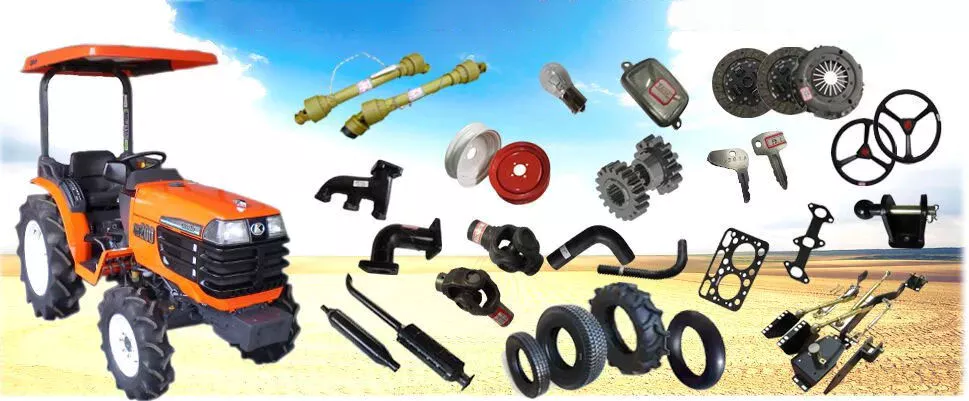
Agricultural machinery, such as tractors, combines, and harvesters, often requires drive shafts that can handle high torque loads and varying operating angles. These drive shafts are designed to transmit power from the engine to attachments and implements, such as mowers, balers, tillers, and harvesters. They may incorporate telescopic sections to accommodate adjustable lengths, flexible joints to compensate for misalignment during operation, and protective shielding to prevent entanglement with crops or debris.
4. Construction and Heavy Equipment:
Construction and heavy equipment, including excavators, loaders, bulldozers, and cranes, require robust drive shaft designs capable of transmitting power in demanding conditions. These drive shafts often have larger diameters and thicker walls to handle high torque loads. They may incorporate universal joints or CV joints to accommodate operating angles and absorb shocks and vibrations. Drive shafts in this category may also have additional reinforcements to withstand the harsh environments and heavy-duty applications associated with construction and excavation.
5. Marine and Maritime Applications:
Drive shaft designs for marine applications are specifically engineered to withstand the corrosive effects of seawater and the high torque loads encountered in marine propulsion systems. Marine drive shafts are typically made from stainless steel or other corrosion-resistant materials. They may incorporate flexible couplings or dampening devices to reduce vibration and mitigate the effects of misalignment. The design of marine drive shafts also considers factors such as shaft length, diameter, and support bearings to ensure reliable power transmission in marine vessels.
6. Mining and Extraction Equipment:
In the mining industry, drive shafts are used in heavy machinery and equipment such as mining trucks, excavators, and drilling rigs. These drive shafts need to withstand extremely high torque loads and harsh operating conditions. Drive shaft designs for mining applications often feature larger diameters, thicker walls, and specialized materials such as alloy steel or composite materials. They may incorporate universal joints or CV joints to handle operating angles, and they are designed to be resistant to abrasion and wear.
These examples highlight the variations in drive shaft designs for different types of machinery. The design considerations take into account factors such as power requirements, operating conditions, space constraints, alignment needs, and the specific demands of the machinery or industry. By tailoring the drive shaft design to the unique requirements of each application, optimal power transmission efficiency and reliability can be achieved.


editor by CX 2023-11-01