Product Description
WSD Type Single Universal Joints(JB/T 5901-1991)
♦Description
HUADING WSD Type Single Universal Joints. Standard components are manufactured from high-grade alloy or stainless steel for increased durability and better performance.
All components are rigorously heat treated and precision machined to close tolerances.
The single universal joint has zero backlashes, seal lubrication, and low inertia. For a given torque capacity, the gimbal of the inverted design is small in size and light in weight. With the telescopic miniature ball spline, the joint can be made into a telescopic unit.
♦Basic Parameter and Main Dimension
Note:
N.m= Norminal Torque; D= Diameter of shaft hole; L= Length of shaft hole; kg.m²= Rotational inertia
1. The weight and rotational inertia in the table are approximate values.
2. When axis Angle β≠0, allowable torque [T]= Tn cosβ.
3. The size L1 of intermediate shaft can be determined as required.
♦Other Products List
| Transmission Machinery Parts Name | Model |
| Universal Coupling | WS, WSD, WSP |
| Cardan Shaft | SWC, SWP, SWZ |
| Tooth Coupling | CL, CLZ, GCLD, GIICL GICL, NGCL, GGCL, GCLK |
| Disc Coupling | JMI, JMIJ, JMII, JMIIJ |
| High Flexible Coupling | LM |
| Chain Coupling | GL |
| Jaw Coupling | LT |
| Grid Coupling | JS |
Company Profile
HangZhou CHINAMFG Machinery Manufacturing Co., Ltd. is a high-tech enterprise specializing in the design and manufacture of various types of coupling. There are 86 employees in our company, including 2 senior engineers and no fewer than 20 mechanical design and manufacture, heat treatment, welding, and other professionals.
Advanced and reasonable process, complete detection means. Our company actively introduce foreign advanced technology and equipment, on the basis of the condition, we make full use of the advantage and do more research and innovation. Strict to high quality and operate strictly in accordance with the ISO9000 quality certification system standard mode.
Our company supplies different kinds of products. High quality and reasonable price. We stick to the principle of “quality first, service first, continuous improvement and innovation to meet the customers” for the management and “zero defect, zero complaints” as the quality objective.
♦Our Services
1. Design Services
Our design team has experience in Cardan shafts relating to product design and development. If you have any needs for your new product or wish to make further improvements, we are here to offer our support.
2. Product Services
Raw materials → Cutting → Forging →Rough machining →Shot blasting →Heat treatment →Testing →Fashioning →Cleaning→ Assembly→ Packing → Shipping
3. Samples Procedure
We could develop the sample according to your requirement and amend the sample constantly to meet your need.
4. Research & Development
We usually research the new needs of the market and develop the new model when there is new cars in the market.
5. Quality Control
Every step should be a special test by Professional Staff according to the standard of ISO9001 and TS16949.
♦FAQ
Q 1: Are you a trading company or a manufacturer?
A: We are a professional manufacturer specializing in manufacturing various series of couplings.
Q 2: Can you do OEM?
Yes, we can. We can do OEM & ODM for all the customers with customized artworks in PDF or AI format.
Q 3: How long is your delivery time?
Generally, it is 20-30 days if the goods are not in stock. It is according to quantity.
Q 4: Do you provide samples? Is it free or extra?
Yes, we could offer the sample but not for free. Actually, we have a very good price principle, when you make the bulk order the cost of the sample will be deducted.
Q 5: How long is your warranty?
A: Our Warranty is 12 months under normal circumstances.
Q 6: What is the MOQ?
A: Usually our MOQ is 1 pcs.
Q 7: Do you have inspection procedures for coupling?
A: 100% self-inspection before packing.
Q 8: Can I have a visit to your factory before the order?
A: Sure, welcome to visit our factory.
Q 9: What’s your payment?
A: T/T.
♦Contact Us
Add: No.11 HangZhou Road,Chengnan park,HangZhou City,ZheJiang Province,China
| Condition: | New |
|---|---|
| Color: | as Your Requirement |
| Structure: | Single |
| Material: | Stainless Steel |
| Model: | Wsd Type Single Universal Joints |
| Diameter: | 16mm – 75mm |
| Samples: | US$ 500/Piece 1 Piece(Min.Order) | |
|---|
| Customization: | Available | Customized Request |
|---|
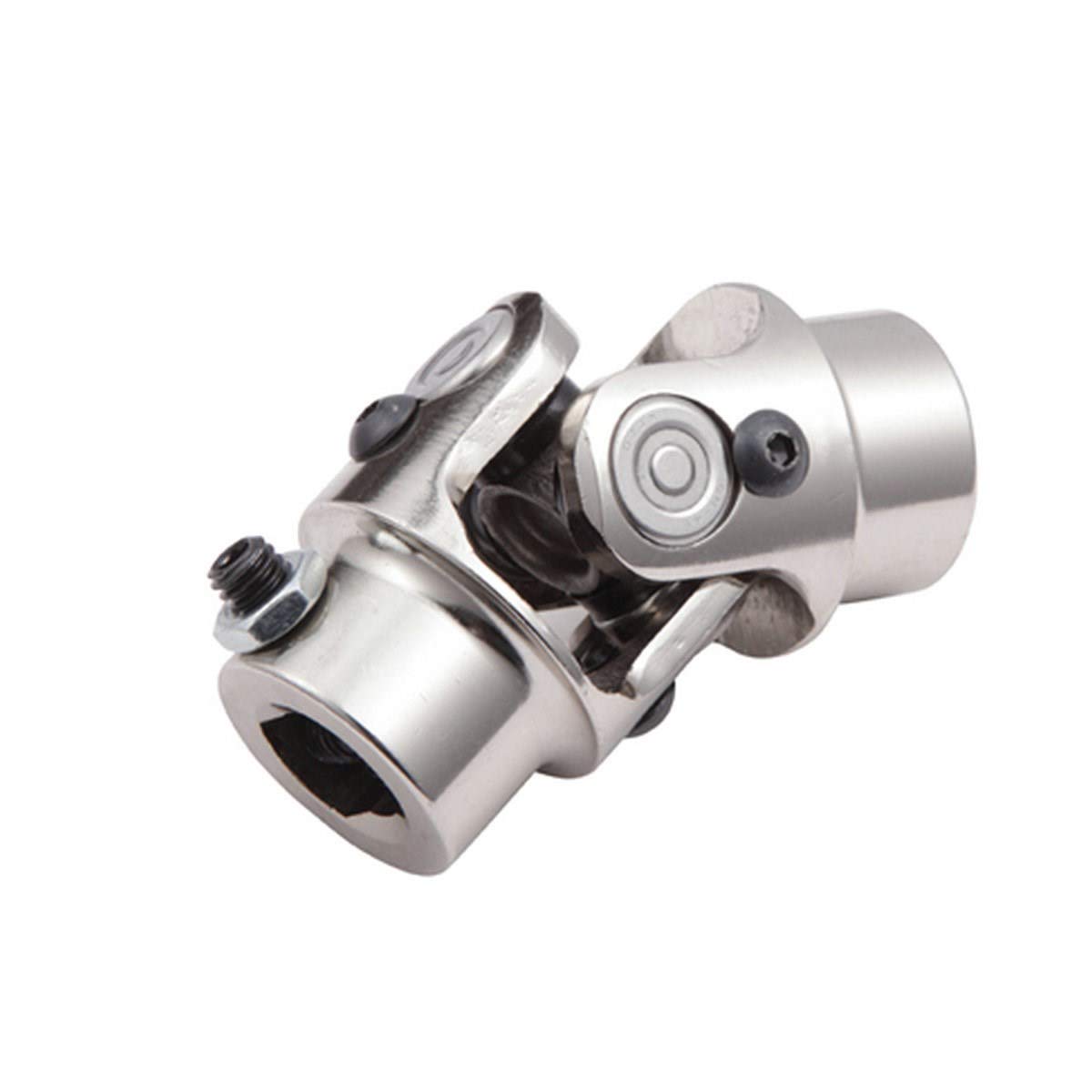
How do you ensure proper alignment when connecting a universal joint?
Ensuring proper alignment when connecting a universal joint is essential for its optimal performance and longevity. Here’s a detailed explanation:
Proper alignment of a universal joint involves aligning the input and output shafts to minimize angular misalignment and maintain a smooth and efficient power transfer. Here are the steps to ensure proper alignment:
- Measure shaft angles: Begin by measuring the angles of the input and output shafts that the universal joint will connect. This can be done using a protractor or an angle measuring tool. The angles should be measured in relation to a common reference plane, such as the horizontal or vertical.
- Calculate the operating angle: The operating angle of the universal joint is the difference between the angles of the input and output shafts. This angle determines the amount of angular misalignment that the universal joint needs to accommodate. It is crucial to calculate the operating angle accurately to ensure the proper selection of a universal joint suitable for the application.
- Select the appropriate universal joint: Based on the calculated operating angle, choose a universal joint that is designed to handle the specific misalignment requirements. Universal joints come in various sizes and designs to accommodate different operating angles and torque loads. Refer to the manufacturer’s specifications and guidelines to select the appropriate universal joint for the application.
- Achieve parallel alignment: To ensure proper alignment, it is important to align the input and output shafts so that they are parallel to each other when viewed from the common reference plane. This can be achieved by adjusting the mounting positions of the shafts or using alignment tools such as straightedges or laser alignment systems. The goal is to minimize any offset or skew between the shafts.
- Check centerline alignment: Once the shafts are parallel, it is necessary to check the centerline alignment. This involves verifying that the centerline of the input shaft and the centerline of the output shaft are in line with each other. Misalignment in the centerline can result in additional stress on the universal joint and lead to premature wear or failure. Use measurement tools or visual inspection to ensure the centerline alignment is maintained.
- Securely fasten the universal joint: After achieving proper alignment, securely fasten the universal joint to the input and output shafts according to the manufacturer’s recommendations. Follow the specified torque values for the fasteners to ensure proper clamping force without over-tightening. This will help maintain the alignment during operation.
- Perform regular maintenance: To ensure continued proper alignment, it is important to perform regular maintenance, including periodic inspections and lubrication of the universal joint. Regular maintenance can help detect any misalignment or wear issues early on and prevent further damage or failure.
By following these steps and paying attention to proper alignment, the universal joint can operate smoothly and effectively, minimizing stress, wear, and the risk of premature failure.
In summary, ensuring proper alignment when connecting a universal joint involves measuring shaft angles, calculating the operating angle, selecting the appropriate universal joint, achieving parallel alignment, checking centerline alignment, securely fastening the joint, and performing regular maintenance.
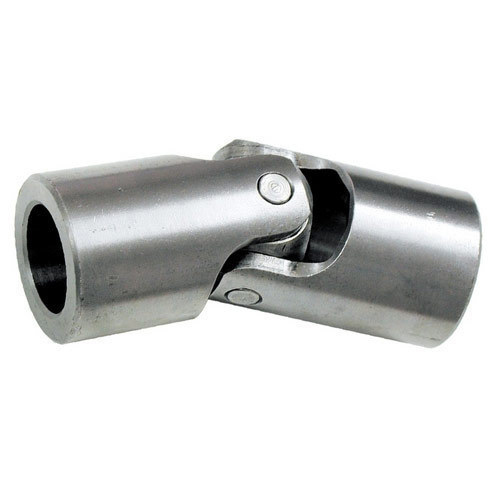
Can universal joints be used in agricultural equipment?
Yes, universal joints can be used in agricultural equipment. Here’s a detailed explanation:
Universal joints are commonly employed in various types of agricultural equipment and machinery. They offer several advantages that make them suitable for agricultural applications. Here are some key points to consider:
- Torque Transmission: Agricultural equipment often requires the transmission of high torque levels to perform tasks such as plowing, tilling, harvesting, or powering other implements. Universal joints are capable of transmitting significant amounts of torque, making them suitable for handling the power requirements of agricultural machinery.
- Flexibility: Agricultural equipment frequently operates in uneven terrain or encounters obstacles that can cause angular misalignment between the driving and driven components. Universal joints can accommodate such misalignment and transmit torque even when the shafts are not perfectly aligned. This flexibility allows agricultural machinery to navigate uneven surfaces and maintain power transfer.
- Durability: Universal joints can be constructed from materials that provide high strength and durability, such as alloy steels. Agricultural equipment often operates in demanding conditions, including exposure to dust, moisture, and vibrations. Robust universal joints can withstand these harsh environments and repetitive motions, ensuring reliable performance and longevity.
- Cost-Effectiveness: Universal joints offer a cost-effective solution for torque transmission in agricultural equipment. Compared to alternative power transmission methods, such as complex gear systems or hydraulic drives, universal joints can provide a more economical option while still delivering adequate performance and reliability.
- Wide Application Range: Universal joints can be used in various agricultural equipment, including tractors, combine harvesters, balers, seeders, sprayers, and more. They are versatile components that can be integrated into different systems and configurations, allowing for efficient power transmission in a wide range of agricultural applications.
It’s important to note that the specific design and selection of universal joints for agricultural equipment should consider factors such as the torque requirements, operating conditions, maintenance practices, and safety considerations. Proper sizing, lubrication, and regular inspections are crucial for ensuring optimal performance and preventing premature wear or failure.
In summary, universal joints can indeed be used in agricultural equipment. Their torque transmission capabilities, flexibility, durability, cost-effectiveness, and versatility make them a suitable choice for power transmission in various agricultural machinery and equipment.
What lubrication is required for a universal joint?
Proper lubrication is crucial for the smooth and efficient operation of a universal joint. The type and amount of lubrication required may vary depending on the specific design and manufacturer’s recommendations. Here are some general guidelines:
- High-quality lubricant: It is important to use a high-quality lubricant that is specifically recommended for universal joints. Consult the manufacturer’s guidelines or technical documentation to determine the appropriate lubricant type and viscosity for your universal joint.
- Grease or oil: Universal joints can be lubricated with either grease or oil, depending on the design and application requirements. Grease is commonly used as it provides good lubrication and helps to seal out contaminants. Oil can be used in applications that require constant lubrication or when specified by the manufacturer.
- Quantity of lubrication: Apply the recommended quantity of lubricant as specified by the manufacturer. Over-greasing or under-greasing can lead to problems such as excessive heat, increased friction, or inadequate lubrication. Follow the manufacturer’s guidelines to ensure the optimal amount of lubricant is applied.
- Lubrication points: Identify the lubrication points on the universal joint. These are typically located at the cross bearings or bearing cups where the cross interfaces with the yoke. Apply the lubricant directly to these points to ensure proper lubrication of the moving components.
- Lubrication intervals: Establish a lubrication schedule based on the operating conditions and manufacturer’s recommendations. Regularly inspect and lubricate the universal joint according to the specified intervals. Factors such as operating speed, load, temperature, and environmental conditions may influence the frequency of lubrication.
- Re-lubrication: In some cases, universal joints may have provisions for re-lubrication. This involves purging old lubricant and replenishing it with fresh lubricant. Follow the manufacturer’s instructions for the re-lubrication procedure, including the recommended interval and method.
- Environmental considerations: Consider the operating environment when selecting the lubricant. Factors such as temperature extremes, exposure to moisture or chemicals, and the presence of contaminants can affect the choice and performance of the lubricant. Choose a lubricant that is suitable for the specific environmental conditions of your application.
- Maintenance and inspection: Regularly inspect the universal joint for signs of inadequate lubrication, excessive wear, or contamination. Monitor the temperature of the joint during operation, as excessive heat can indicate insufficient lubrication. Address any lubrication issues promptly to ensure the proper functioning and longevity of the universal joint.
Always refer to the manufacturer’s recommendations and guidelines for lubrication specific to your universal joint model. Following the proper lubrication practices will help optimize the performance, reduce wear, and extend the lifespan of the universal joint.


editor by CX 2023-11-08