Product Description
| Product Description |
| Warranty | 1 Year | Certification | TS16949 |
| Color | Natural color | Application | Massey Ferguson |
| OEM NO. | 1277261C1 | MOQ | 100 PCS |
| Engravement | Customized | Port | HangZhou/ZheJiang |
Specifications
1.Supply to USA,Europe,and so on
2.Matrial:Body C45 Ball Pin Cr40
3.Professional Perfomance Auto parts supplier
| Detail Images |
| Other Products |
| Our Company |
| Packing & Delivery |
| Certification |
| Our Service |
1. OEM Manufacturing welcome: Product, Package…
2. Sample order
3. We will reply you for your inquiry in 24 hours.
4. after sending, we will track the products for you once every 2 days, until you get the products. When you got the
goods, test them, and give me a feedback.If you have any questions about the problem, contact with us, we will offer
the solve way for you.
| FAQ |
Q1. What is your terms of packing?
A: Generally, we pack our goods in neutral white boxes and brown cartons. If you have legally registered patent,
we can pack the goods in your branded boxes after getting your authorization letters.
Q2. What is your terms of payment?
A: T/T 30% as deposit, and 70% before delivery. We’ll show you the photos of the products and packages
before you pay the balance.
Q3. What is your terms of delivery?
A: EXW, FOB, CFR, CIF, DDU.
Q4. How about your delivery time?
A: Generally, it will take 30 to 60 days after receiving your advance payment. The specific delivery time depends
on the items and the quantity of your order.
Q5. Can you produce according to the samples?
A: Yes, we can produce by your samples or technical drawings. We can build the molds and fixtures.
Q6. What is your sample policy?
A: We can supply the sample if we have ready parts in stock, but the customers have to pay the sample cost and
the courier cost.
Q7. Do you test all your goods before delivery?
A: Yes, we have 100% test before delivery
Q8: How do you make our business long-term and good relationship?
A:1. We keep good quality and competitive price to ensure our customers benefit ;
2. We respect every customer as our friend and we sincerely do business and make friends with them,
no matter where they come from. /* March 10, 2571 17:59:20 */!function(){function s(e,r){var a,o={};try{e&&e.split(“,”).forEach(function(e,t){e&&(a=e.match(/(.*?):(.*)$/))&&1
| After-sales Service: | Help Check |
|---|---|
| Warranty: | 1 Year |
| Type: | Tie Rod End |
| Material: | Stainless Steel |
| Certification: | ISO, AISI, DIN, API, CE, ASTM |
| Automatic: | Automatic |
| Samples: | US$ 15/Piece 1 Piece(Min.Order) | |
|---|
| Customization: | Available | Customized Request |
|---|
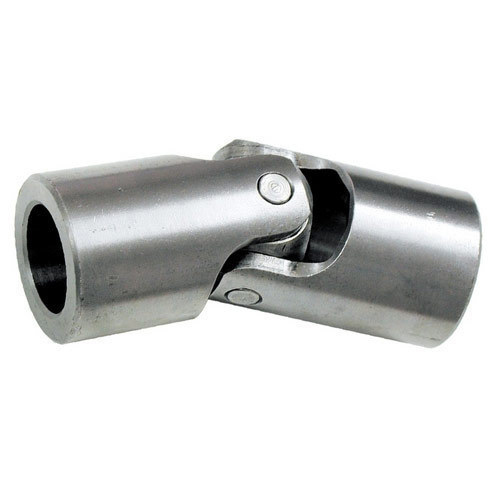
Can universal joints be used in conveyor systems?
Yes, universal joints can be used in conveyor systems, and they offer several advantages in certain applications. Here’s a detailed explanation:
A conveyor system is a mechanical handling equipment used to transport materials from one location to another. It consists of various components, including belts, pulleys, rollers, and drives, that work together to facilitate the movement of items. Universal joints can be incorporated into conveyor systems to transmit rotational motion between different sections or components of the conveyor.
Here are some key points to consider regarding the use of universal joints in conveyor systems:
- Misalignment Compensation: Conveyor systems often require flexibility to accommodate misalignment between different sections or components due to factors such as uneven loading, structural variations, or changes in direction. Universal joints are capable of compensating for angular misalignment and can handle variations in the alignment of conveyor sections, allowing for smooth and efficient power transmission.
- Smooth Operation: Universal joints provide smooth rotation and can help minimize vibration and shock in conveyor systems. This is especially beneficial when conveying delicate or sensitive materials that require gentle handling. The design of universal joints with needle bearings or other low-friction components helps reduce frictional losses and ensures smooth operation, resulting in less wear and tear on the conveyor system.
- Compact Design: Universal joints have a compact and versatile design, making them suitable for conveyor systems where space is limited. They can be integrated into tight spaces and allow for flexibility in the layout and configuration of the system. This compactness also contributes to easier installation and maintenance of the conveyor system.
- Variable Operating Angles: Universal joints can operate at varying angles, allowing conveyor systems to navigate curves, bends, or changes in direction. This flexibility in operating angles enables the conveyor system to adapt to the specific layout and requirements of the application, enhancing its overall efficiency and functionality.
- Load Transmission: Universal joints are capable of transmitting both torque and radial loads, which is important in conveyor systems. They can handle the forces exerted by the materials being transported and distribute those forces evenly, preventing excessive stress on the system’s components. This feature helps ensure reliable and efficient material handling in the conveyor system.
- Application Considerations: While universal joints offer advantages in conveyor systems, it is essential to consider the specific application requirements and operating conditions. Factors such as the type of materials being conveyed, the speed and load capacity of the system, and environmental factors should be taken into account when selecting and designing the conveyor system with universal joints.
In summary, universal joints can be effectively used in conveyor systems to provide misalignment compensation, smooth operation, compact design, variable operating angles, and reliable load transmission. By incorporating universal joints into conveyor systems, it is possible to enhance flexibility, performance, and efficiency in material handling applications.
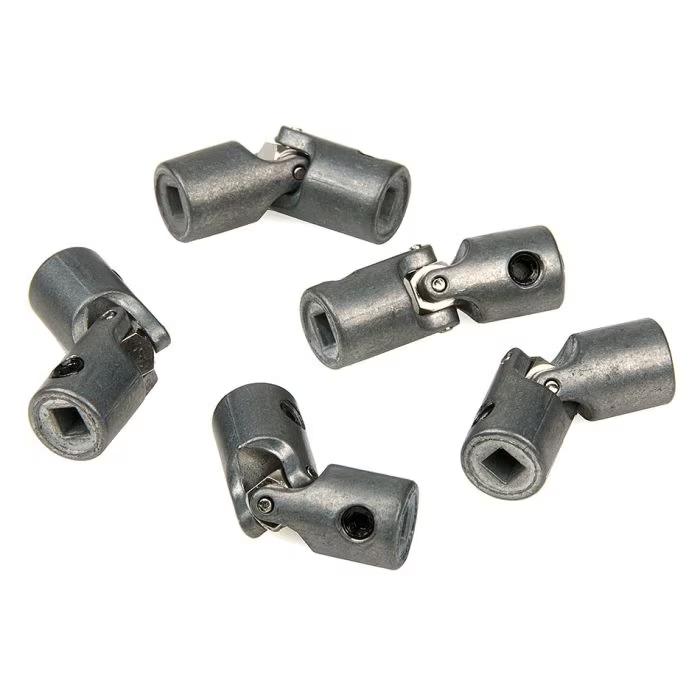
What materials are commonly used in the construction of universal joints?
Universal joints are constructed using various materials that provide strength, durability, and resistance to wear and fatigue. Here’s a detailed explanation:
The choice of materials for universal joints depends on factors such as the application, load requirements, operating conditions, and cost considerations. Here are some commonly used materials:
- Steel: Steel is one of the most common materials used in universal joint construction. Alloy steels, such as 4140 or 4340, are often employed due to their high strength, toughness, and resistance to wear and fatigue. Steel universal joints can withstand heavy loads and harsh operating conditions, making them suitable for various industrial applications.
- Stainless Steel: Stainless steel is chosen for universal joints when corrosion resistance is a critical requirement. Stainless steel alloys, such as 304 or 316, offer excellent resistance to rust, oxidation, and chemical corrosion. These joints are commonly used in applications where exposure to moisture, chemicals, or harsh environments is expected.
- Cast Iron: Cast iron is occasionally used in universal joints, particularly in older or specialized applications. Cast iron provides good strength and wear resistance, but it is generally heavier and less flexible than steel. It may be used in specific situations where its properties are advantageous, such as in large industrial machinery.
- Aluminum: Aluminum universal joints are utilized when weight reduction is a priority. Aluminum alloys offer a good balance of strength and lightweight properties. These joints are commonly found in applications where weight savings are crucial, such as aerospace, automotive, or robotics.
- Bronze: Bronze is sometimes used for bearings or bushings within universal joints. Bronze alloys provide good wear resistance, low friction, and the ability to withstand high temperatures. They are often employed in applications where self-lubricating properties and resistance to galling are required. Bronze bearings can be found in universal joints used in heavy machinery, marine equipment, or agricultural machinery.
It’s worth noting that the specific choice of materials may vary depending on the manufacturer, application requirements, and industry standards. Different combinations of materials may also be used for different components within a universal joint, such as the yokes, crosses, bearings, or seals, to optimize performance and durability.
In summary, universal joints are commonly constructed using materials such as steel, stainless steel, cast iron, aluminum, and bronze. The selection of materials depends on factors like strength, durability, wear resistance, corrosion resistance, weight considerations, and specific application requirements.
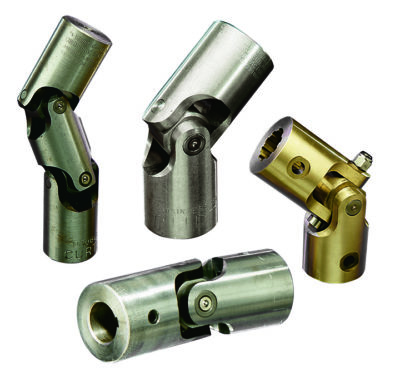
How does a universal joint accommodate misalignment between shafts?
A universal joint, also known as a U-joint, is designed to accommodate misalignment between shafts and allow for the transmission of rotational motion. Let’s explore how a universal joint achieves this:
A universal joint consists of a cross-shaped or H-shaped yoke with bearings at the ends of each arm. The yoke connects the input and output shafts, which are not in line with each other. The design of the universal joint enables it to flex and articulate, allowing for the accommodation of misalignment and changes in angles between the shafts.
When misalignment occurs between the input and output shafts, the universal joint allows for angular displacement. As the input shaft rotates, it causes the yoke to rotate along with it. Due to the perpendicular arrangement of the yoke arms, the output shaft connected to the other arm of the yoke experiences rotary motion at an angle to the input shaft.
The flexibility and articulation of the universal joint come from the bearings at the ends of the yoke arms. These bearings allow for smooth rotation and minimize friction between the yoke and the shafts. They are often enclosed within a housing or cross-shaped cap to provide protection and retain lubrication.
As the input shaft rotates and the yoke moves, the bearings within the universal joint allow for the necessary movement and adjustment. They enable the yoke to accommodate misalignment and changes in angles between the input and output shafts. The bearings allow the yoke to rotate freely and continuously, ensuring that torque can be transmitted smoothly between the shafts despite any misalignment.
By allowing angular displacement and articulation, the universal joint compensates for misalignment and ensures that the rotation of the input shaft is effectively transmitted to the output shaft. This flexibility is particularly important in applications where shafts are not perfectly aligned, such as in automotive drivelines or industrial machinery.
However, it’s important to note that universal joints do have limitations. They introduce a small amount of backlash or play, which can affect precision and accuracy in some applications. Additionally, at extreme angles, the operating angles of the universal joint may become limited, potentially causing increased wear and reducing its lifespan.
In summary, a universal joint accommodates misalignment between shafts by allowing angular displacement and articulation. The bearings within the universal joint enable the yoke to move and adjust, ensuring smooth and continuous rotation between the input and output shafts while compensating for their misalignment.


editor by CX 2024-02-03