Heavy-Duty Drive Shafts for Australian Forging Presses
Shock-Resistant 42CrMo4 Engineering with 1,000 kNm Torque Capacity
The Role of High-Impact Universal Joints in Forging Excellence
In the demanding world of Australian industrial forging, the mechanical stress placed on drive systems is unparalleled. Forging presses, which shape metal through massive localized compressive forces, require drive shafts that can handle not just rotation, but violent energy transfers and sudden load spikes. AU driveshaftjoint.com Co.,Ltd provides the specialized cardan shaft technology required to keep these giants moving. Our equipment is designed for the most intense applications found in Western Australian mine-site workshops and New South Wales heavy engineering plants.
The engineering profile of a forging press drive is distinct from standard industrial machinery. With torque capacities reaching 1,000 kNm and service factors between K=4 and K=8, these shafts are built to absorb the kinetic recoil of every hammer strike. We utilize premium 42CrMo4 steel that has undergone rigorous forging and induction hardening to achieve a surface hardness of HRC 60-65. This ensures that the splines and cross-kits remain dimensionally stable even when operating at speeds up to 700 RPM under heavy shock loads.
Safety is paramount in these environments. Our shafts comply with GB/T 38392 standards and feature specialized thrust bearing configurations to prevent axial load shifts during high-pressure cycles. While global trends explore the use of carbon fiber for heat resistance, our metallurgical experts maintain that for the extreme impact loads of forging, the ductility and strength of high-alloy forged steel remain the gold standard for reliable 40,000-hour lifespans.

Application Scenarios: Australian Forging Sector
1. Mining Drill Bit & Component Forging (WA)
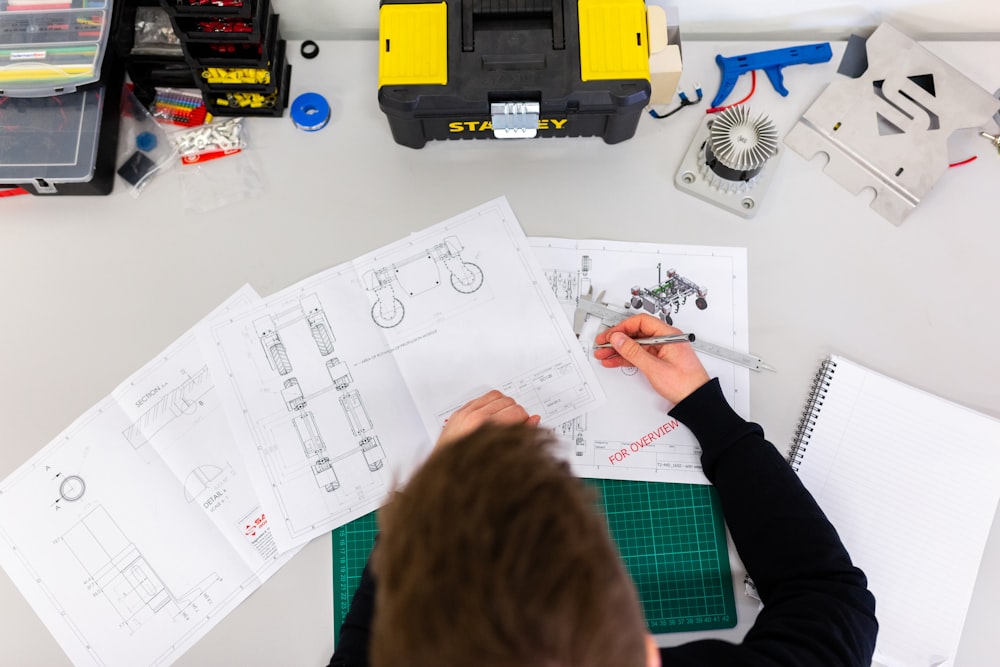
In the Pilbara region, forging presses work around the clock to create hardened drill bits and heavy ground-engaging tools. Our shafts are designed with 12° angular flexibility to accommodate the unique spatial constraints of these high-output press lines. By utilizing G16 balancing, we prevent the harmful vibrations that lead to early bearing failure in the press flywheel.
2. Aerospace Aluminum Forging (VIC/NSW)
High-precision aerospace forging requires absolute consistency in torque delivery. Our cardan shafts feature specialized low-friction coatings and precision-machined joints to ensure that rotational speed remains constant, even as the press moves through its cycle. This precision allows for the forging of high-strength aluminum alloys with minimal internal stress variances.


3. Heavy Rail & Axle Forging (Regional QLD)
Forging large axles for Australia’s vast rail network requires massive energy. Our shafts integrate AI-driven sensors that monitor torque spikes in real-time. This predictive model alerts operators if the load profile exceeds safe limits, preventing shaft twisting or joint breakage during the heavy forging of structural rail steel components.
Industrial Interchangeability & Comparison
| Parameter | Voith/GWB (Reference) | Maina/Rexnord (Reference) | AU driveshaftjoint Solution |
|---|---|---|---|
| Torque (kNm) | 300 – 950 | 250 – 850 | Up to 1,000+ |
| Hardness (HRC) | 55 – 60 | 52 – 58 | 60 – 65 (Induction) |
| Service Factor (K) | Up to 6.0 | Up to 5.0 | Tuned for K=8.0 |
*We do not sell original GWB, Voith, or Rexnord products. We provide high-spec alternative drives designed for direct dimensional interchangeability with reduced lead times for the Australian market.*
Real-World Case Studies: Forging Press Performance
Heavy Forging Plant in Newcastle, NSW
A large-scale forging facility in Newcastle was experiencing repeated yoke fractures on their 8,000-ton hydraulic press drive. The existing shafts, sourced from a standard industrial catalog, were not rated for the high-frequency vibration of the press. AU driveshaftjoint.com Co.,Ltd engineered a custom heavy-wall cardan shaft using 42CrMo4 steel with a K=7.0 service factor. We also integrated a specialized thrust bearing to handle the axial recoil of the press stroke. Since installation, the facility has completed 18 months of continuous three-shift operation without a single hour of drivetrain downtime, saving an estimated $120,000 in lost production capacity and emergency labor costs.
Automotive Component Forge in Adelaide, SA
An Adelaide-based manufacturer of high-strength suspension components required a drive shaft that could maintain G16 balancing at 600 RPM while operating at a 10° angle. Previous shafts from a European competitor were suffering from early bearing fatigue due to centrifugal imbalance. Our technical team provided a precision-balanced, induction-hardened shaft with HRC 62 splines. The smoother power transfer allowed the facility to increase their stroke rate by 15% without risking mechanical failure. The manufacturer reported a significant reduction in gearbox heat levels, as the balanced shafts were no longer transmitting parasitic vibrations into the drive motor, extending the life of the entire powertrain.
Rail Axle Forge in Gladstone, QLD
A specialized forge in Queensland was struggling with lubricant leakage on their vertical press shafts. The intense radiant heat from the hot steel blooms was melting standard grease, leading to joint seizing. We provided a “Heat-Shield” drive shaft solution featuring high-temperature synthetic grease and high-density Viton seals capable of withstanding 250°C. Additionally, we implemented an IoT monitoring system to track bearing temperatures. When the AI model detected a slight temperature trend upward, it triggered a “Condition Yellow” alert, allowing the team to perform a 10-minute regreasing rather than a catastrophic 2-day repair. This proactive approach has made us their primary drivetrain partner for all future facility expansions.
Mining Drill Bit Forge in Perth, WA
In the highly competitive mining tool sector, a Perth forge needed to reduce lead times for replacement drive components. They were waiting 16 weeks for shafts from overseas OEMs. AU driveshaftjoint.com provided a standardized direct-replacement shaft series with a 4-week turnaround. By switching to our locally supported 42CrMo4 forged shafts, they eliminated the need to carry $200,000 worth of spare parts in inventory. The first shaft has now outperformed the original OEM part by over 8,000 operational hours, thanks to our deep-induction hardening process. The customer has now retrofitted their entire tool-forging line with our high-impact universal joints, citing both performance and logistical efficiency as key drivers.
Frequently Asked Questions: Forging Press Drives
What is the significance of the K=4 to K=8 service factor?
▾
In forging, the drive shaft is hit by sudden torque spikes that can be many times the nominal operating torque. A service factor of K=8 means the shaft is engineered to handle peak loads eight times higher than its continuous rating, ensuring safety and preventing fatigue fracture during heavy impact.
How does induction hardening to HRC 60-65 help my press?
▾
This level of hardness prevents “spline galling” and wear on the bearing surfaces. For forging presses, where start-stop cycles and high impacts are frequent, this hardness ensures the shaft maintains its precision fit for over 40,000 hours of service.
Can your shafts replace original parts on Schuler or SMS Group presses?
▾
Yes. We specialize in reverse-engineering and dimensional matching. We can provide shafts with DIN, SAE, or custom cross-serrated flanges that bolt directly into your existing press drivetrain without modification.
What is the role of the thrust bearing in your design?
▾
When a forging press impacts, there is an axial recoil that travels back through the drive system. Our integrated thrust bearings absorb this longitudinal force, protecting the drive motor and preventing the universal joints from being “pinched,” which causes immediate failure.
Does the AI monitoring require a constant internet connection?
▾
No. The AI model can run on a local server within your facility. It processes sensor data locally and only requires an external connection if you wish to receive remote alerts on mobile devices or integrate with our off-site technical support team.
How do you ensure the shafts don’t overheat in hot forge environments?
▾
We use a combination of thermal-reflective coatings, high-temperature seals, and specialized lubricants. We also recommend our “Vented Yoke” design for high-RPM applications to help dissipate internal heat.
What is the lead time for a custom 1,000 kNm shaft?
▾
While massive custom shafts typically take 10-12 weeks globally, our Sydney-based logistics and stocked forged blanks allow us to deliver custom solutions in as little as 6-8 weeks for critical Australian projects.
Do you provide installation support at remote mine sites?
▾
Yes. Our engineering specialists are available for technical consultation and on-site supervision of shaft alignment and commissioning anywhere in Australia, ensuring your new drive is perfectly tuned to your specific press dynamics.
Solving B2B Pain Points in Forging Drivetrains
Overcoming Component Fatigue
We solve the issue of recurring joint failure by using high-impact 42CrMo4 forged steel, ensuring your shafts outlast standard industrial alternatives by up to 200%.
Eliminating Maintenance Blind Spots
Our AI monitoring system alerts you to heat and vibration anomalies before they cause a breakdown, transforming your maintenance from reactive to predictive.
Reducing OEM Lead Times
Tired of waiting months for European parts? We provide high-spec, dimensionally accurate replacements with localized Australian support and drastically shorter delivery windows.
Secure Your Forging Press Operations
Industrial-strength drive solutions for the most demanding Australian environments.
AU driveshaftjoint.com Co.,Ltd
Sydney HQ: 27 Harley Crescent Condell Park NSW 2200
Technical Sales: [email protected]
© 2026 AU driveshaftjoint.com Co.,Ltd | Professional Drive Solutions for Australian Metalworking