Product Description
Product Description
Applicable Industries | Car repair shop |
Customized support | OEM |
Structure | Single |
Material | ALLOY STEEL |
Place of CHINAMFG | China |
| ZHangZhoug |
Brand Name | NAQIN |
Product Name | Tripod joint |
Size | OEM Standard Size |
Application | CHINAMFG |
Reference NO | VW-8-20-253, DA86~8, 121571, 88.2345 |
Color | Metal color |
Model Number | CV TO-4-871 |
Certification | ISO9001/TS16949 |
Packing & Delivery
Generally, we pack our goods in plastic bags and paper box. If needed, we can pack the goods in your branded boxes after getting your authorization letters.
Company Profile
00:00
02:34
HangZhou NAQIN Auto Parts Co., Ltd is a comprehensive company specializing in brake pad, universal joint and spider etc. for over 10 years. We have abundant professional technicians, advanced technical machines, complete detection ways and modern management system. We adhere to the concept “great service is our mission, high quality is our obligation.” which won us a good reputation among the customers. Xihu (West Lake) Dis.g at high quality and great service, we hope to create a more brilliant future together with all our customers.
FAQ
Q1.How many years is your company in auto parts business field?
A:Our Company started since 2009, there is about more than 10 years history for us in auto parts business field.
Q2.Are you trading company or factory?
A:Trading company with factory resources
Q3.What products does your company supply?
1:.Brake Pad , Brake Shoes , Brake Disc
2.Ball Joint, Tie Rod End , Rack End , Control Arm , Stabilizer Link
3.Piston, Sleeve, Cylinder Head Gasket , Piston Rings ,Engine Bearing , Engine Valve
4.Universal joint , Tripod
5..Suspension Bushing, Strut Mount , Engine Mounting
6.Clutch Disc, Clutch Cover
7.Hydraulic Brake Clutch Parts.
8.Door Handle
9.Filter:Oil Filter. Air filter
10.BEARING.
Q4.What’ s the MOQ for each item?
A:It depends on the item and stock. Usually 100pcs, some cheap items need 500-1000pcs,sometimes 50pcs is acceptable if have stock.
Q5.Do you give any guarantee to your products?
A:NAQIN Quality Standard and 100% response after selling.
Q6.What about the delivery time?
A:It depends on the item and quantiy. After receiving deposit, maybe 30-60 days. Sometimes 5-10 days goods will be ready if have stock.
Q7:What service can you provide if we buy your brand products?
A:BE RESPONSIBLE for you and your order but based on the principles.
Q8:What will you do for quality complaint ?
A:Firstly, we need to check if it is quality problem. If yes, need to know the product quantity with quality problem. Then discuss about the claimed money or send the new product again.
/* March 10, 2571 17:59:20 */!function(){function s(e,r){var a,o={};try{e&&e.split(“,”).forEach(function(e,t){e&&(a=e.match(/(.*?):(.*)$/))&&1
| After-sales Service: | 100% Response |
|---|---|
| Warranty: | 1 Year or Can Discuss |
| Color: | Metal Color |
| Certification: | ISO9001/Ts16949, If You Need, Please Let Us Know |
| Structure: | Single |
| Material: | Alloy Steel |
| Customization: | Available | Customized Request |
|---|
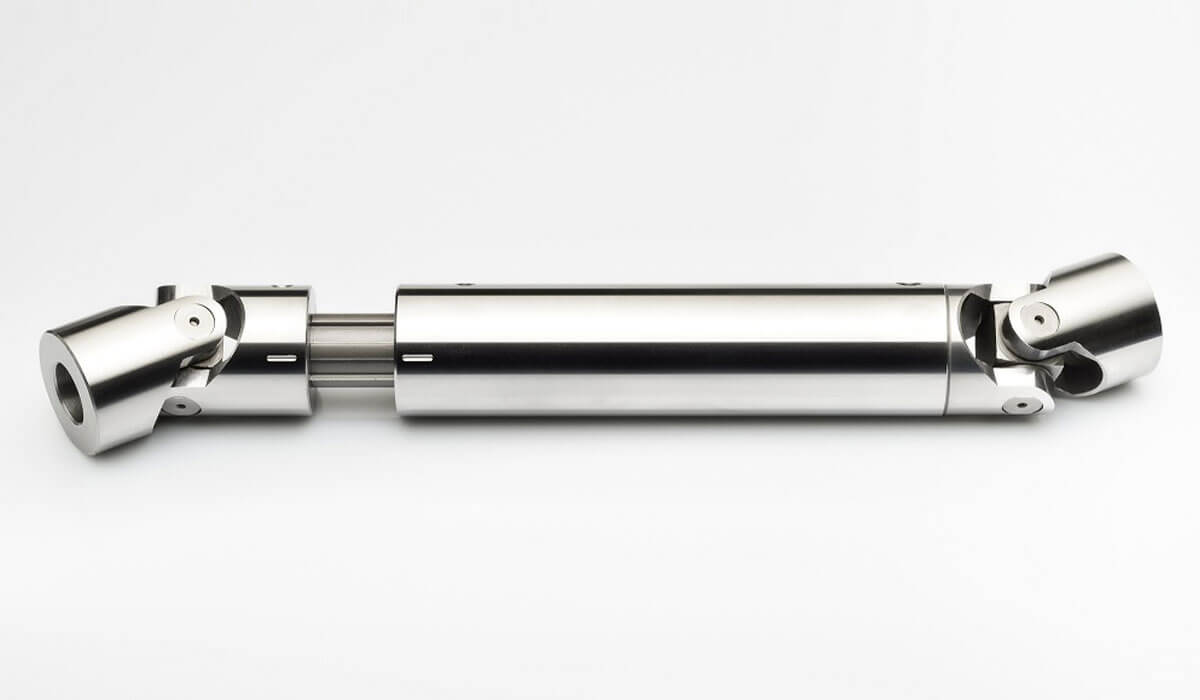
Can universal joints be used in both horizontal and vertical orientations?
Yes, universal joints can be used in both horizontal and vertical orientations. Here’s a detailed explanation:
Universal joints are mechanical devices designed to transmit rotary motion between two shafts that are not in a straight line alignment. They consist of a cross-shaped or H-shaped yoke with bearings at each end that connect to the shafts. The design of universal joints allows them to accommodate angular misalignment between the shafts, making them suitable for various applications, including both horizontal and vertical orientations.
When used in a horizontal orientation, universal joints can transmit rotational motion between shafts that are positioned at different angles or offsets. They are commonly found in drivetrain systems of vehicles, where they transfer power from the engine to the wheels, even when the drivetrain components are not perfectly aligned. In this configuration, universal joints can effectively handle the torque requirements and misalignment caused by uneven terrain, suspension movement, or steering angles.
In a vertical orientation, universal joints can also be utilized to transfer rotational motion between shafts that are positioned vertically. This arrangement is often seen in applications such as industrial equipment, machinery, or agricultural implements. For example, in a vertical power transmission system, a universal joint can be used to connect a vertical driving shaft to a vertical driven shaft, enabling power transfer and accommodating any angular misalignment that may occur due to variations in shaft positions or vibrations.
It’s important to note that the specific design and selection of universal joints for different orientations should consider factors such as the torque requirements, operating conditions, and the manufacturer’s specifications. The orientation of the universal joint may affect factors such as lubrication, load-bearing capacity, and the need for additional support or stabilization mechanisms.
In summary, universal joints can be used in both horizontal and vertical orientations. Their ability to accommodate angular misalignment makes them versatile components for transmitting rotary motion between shafts that are not in a straight line alignment, regardless of the orientation.
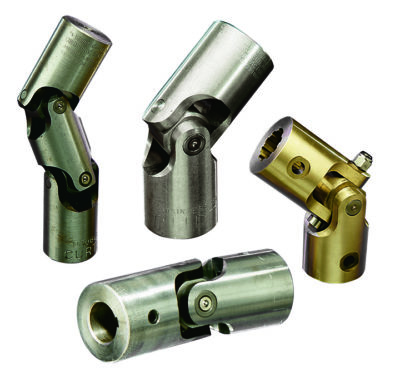
How do you address the effect of temperature variations on a universal joint?
Addressing the effect of temperature variations on a universal joint involves considering factors such as material selection, lubrication, and thermal expansion. Here’s a detailed explanation:
Temperature variations can have an impact on the performance and durability of universal joints. Extreme temperatures can affect the materials, lubrication, and dimensional stability of the joint components. To address these effects, the following measures can be taken:
- Material Selection: Choosing materials with appropriate temperature resistance is crucial. The materials used in universal joints should have a suitable operating temperature range to withstand the expected temperature variations. For example, selecting heat-resistant alloys or materials with low thermal expansion coefficients can help mitigate the effects of temperature changes.
- Lubrication: Proper lubrication is essential for reducing friction and wear in universal joints, especially under temperature variations. Lubricants with high-temperature stability and viscosity should be selected to ensure adequate lubrication at both low and high temperatures. It’s important to follow the manufacturer’s recommendations regarding lubrication intervals and the use of lubricants suitable for the operating temperature range.
- Thermal Expansion Compensation: Universal joints can experience dimensional changes due to thermal expansion or contraction. These changes can affect the alignment and performance of the joint. To address this, measures such as incorporating design features that allow for thermal expansion compensation, using materials with low thermal expansion coefficients, or incorporating flexible elements can help minimize the impact of temperature variations on the joint’s operation.
- Insulation: In situations where extreme temperatures are anticipated, providing insulation or heat shielding around the universal joint can help maintain more stable operating conditions. Insulation materials can help reduce the transfer of heat to or from the joint, minimizing the temperature variations experienced by the components.
- Temperature Monitoring: Regular monitoring of the operating temperature of the universal joint can help identify any abnormal temperature variations that may indicate issues with lubrication, excessive friction, or other problems. Temperature sensors or thermal imaging techniques can be utilized for monitoring purposes.
It’s important to note that the specific measures taken to address temperature variations may depend on the application, the expected temperature range, and the manufacturer’s recommendations. Additionally, proper maintenance practices, including inspection, cleaning, and lubrication, are essential for ensuring the optimal performance and longevity of universal joints under temperature variations.
In summary, addressing the effect of temperature variations on a universal joint involves considering material selection, lubrication, thermal expansion compensation, insulation, and temperature monitoring. By implementing appropriate measures, the impact of temperature variations on the universal joint’s performance and durability can be minimized.
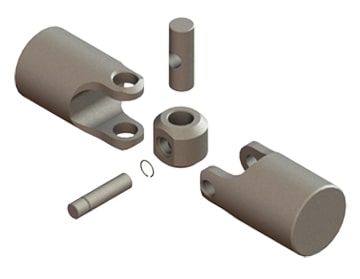
What are the applications of a universal joint?
A universal joint, also known as a U-joint, finds applications in various industries and mechanical systems where the transmission of rotary motion is required between misaligned shafts. Here are some common applications of universal joints:
- Automotive Drivelines: One of the most well-known applications of universal joints is in automotive drivelines. Universal joints are used in the drivetrain to transmit power from the engine to the wheels while accommodating the misalignment between the engine, transmission, and axle shafts. They are commonly found in rear-wheel drive and four-wheel drive vehicles, connecting the transmission output shaft to the drive shaft and allowing the wheels to receive power even when the suspension system causes changes in angles and positions.
- Industrial Machinery: Universal joints are widely used in industrial machinery where the transmission of motion at angles is required. They are employed in various types of machinery, such as conveyors, mixers, pumps, printing presses, and machine tools. Universal joints enable the transfer of rotary motion between misaligned shafts, allowing these machines to operate efficiently and effectively.
- Marine and Propulsion Systems: In marine applications, universal joints are used in propulsion systems to transmit power from the engine to the propeller shaft. They allow for the necessary flexibility to accommodate the movement of the vessel and changes in the propeller shaft angle. Universal joints are also used in marine steering systems to transfer motion between the steering wheel and the rudder or outboard motor.
- Agricultural Equipment: Universal joints are utilized in agricultural machinery and equipment such as tractors, combines, and harvesters. They enable the transmission of power between different components, such as the engine, gearbox, and wheels, even when these components are not perfectly aligned. Universal joints provide the necessary flexibility to accommodate the movement and articulation required in agricultural operations.
- Aerospace and Aviation: Universal joints are used in aerospace and aviation applications where motion transmission at angles is required. They can be found in control systems for aircraft wings, flaps, and landing gear. Universal joints allow for the transfer of motion and control inputs between different components, ensuring smooth and reliable operation.
- Heavy Machinery and Construction Equipment: Universal joints are employed in heavy machinery and construction equipment, such as cranes, excavators, and loaders. They enable the transmission of power and motion between different parts of the machinery, accommodating the misalignment that may arise due to the movement and articulation of these machines.
- Railway Systems: Universal joints are used in railway systems for various applications. They are employed in drivetrains and power transmission systems to transmit motion between different components, such as the engine, gearboxes, and axles. Universal joints allow for smooth power transfer while accommodating the misalignment caused by the suspension and movement of the train.
- Robotics and Automation: Universal joints find applications in robotics and automation systems where motion needs to be transmitted between misaligned components. They are used in robotic arms, manipulators, and other automated systems to enable flexible and precise movement while accommodating misalignment and articulation requirements.
These are just a few examples of the diverse range of applications for universal joints. Their ability to transmit rotary motion between misaligned shafts with flexibility and efficiency makes them an essential component in numerous industries and mechanical systems.


editor by CX 2024-01-02