Product Description
Product Description
Stainless Steel 304 Pipeline Metallic Bellows Expansion Telescopic Joint
Dismantlable joint,
Make installation of large size valves easier! Compensate the installation distance.
Product name | Dismantling joint | |
Size (mm) | 200-1500mm | |
Connection standard selection | According to your pipe standard | |
Material | Body/Shell | Ductile iron; Carbon steel, SS steel, other material needed |
Bolts | Galvanized Steel; SS steel, other material needed | |
Rubber joint, Protect the pipe from vibration and slightly deform because of sedimentation!
Product name | Rubber joint | |
Size (mm) | 50-800mm other size customized | |
Connection standard selection | According to your pipe standard | |
Material Selection | Flange | Ductile iron; Carbon steel, SS steel, other material needed |
Bellow | Nature rubber, EPDM, NBR, Neoprene | |
Bellow joint Protect the pipe from vibration and slightly deform because of sedimentation!
Product name | Bellow joint | |
Size (mm) | 50-300mm other size customized | |
Connection standard selection | According to your pipe standard | |
Material | Flange | Carbon steel, SS steel, other material needed |
Bellow | SS steel 304, 316 etc | |
Qualification certificate
HOTSALE
product-list-1.html
Production process
Production equipment
If you want to learn more,please contact with us
LIKE VALVE (ZheJiang ) CO., LTD
Sales Director
KATRINA JIA
http://likevalve
Address: H12 Tengfei Base of Xiaozhan Industrial Area, Xihu (West Lake) Dis. District , ZheJiang , China
We will always be here try our best to provide you our best service!
/* March 10, 2571 17:59:20 */!function(){function s(e,r){var a,o={};try{e&&e.split(“,”).forEach(function(e,t){e&&(a=e.match(/(.*?):(.*)$/))&&1
| Standard or Nonstandard: | Standard |
|---|---|
| Product Name: | Bellows Pipe Expansion Joint |
| Body: | Stainless Steel 304 |
| Samples: | US$ 25/Piece 1 Piece(Min.Order) | Order Sample |
|---|
| Customization: | Available | Customized Request |
|---|
.shipping-cost-tm .tm-status-off{background: none;padding:0;color: #1470cc}
| Shipping Cost: Estimated freight per unit. | about shipping cost and estimated delivery time. |
|---|
| Payment Method: |
|
|---|---|
| Initial Payment Full Payment |
| Currency: | US$ |
|---|
| Return&refunds: | You can apply for a refund up to 30 days after receipt of the products. |
|---|
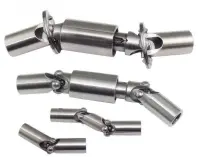
How do you calculate the torque capacity of a universal joint?
Calculating the torque capacity of a universal joint involves considering various factors such as the joint’s design, material properties, and operating conditions. Here’s a detailed explanation:
The torque capacity of a universal joint is determined by several key parameters:
- Maximum Allowable Angle: The maximum allowable angle, often referred to as the “operating angle,” is the maximum angle at which the universal joint can operate without compromising its performance and integrity. It is typically specified by the manufacturer and depends on the joint’s design and construction.
- Design Factor: The design factor accounts for safety margins and variations in load conditions. It is a dimensionless factor typically ranging from 1.5 to 2.0, and it is multiplied by the calculated torque to ensure the joint can handle occasional peak loads or unexpected variations.
- Material Properties: The material properties of the universal joint’s components, such as the yokes, cross, and bearings, play a crucial role in determining its torque capacity. Factors such as the yield strength, ultimate tensile strength, and fatigue strength of the materials are considered in the calculations.
- Equivalent Torque: The equivalent torque is the torque value that represents the combined effect of the applied torque and the misalignment angle. It is calculated by multiplying the applied torque by a factor that accounts for the misalignment angle and the joint’s design characteristics. This factor is often provided in manufacturer specifications or can be determined through empirical testing.
- Torque Calculation: To calculate the torque capacity of a universal joint, the following formula can be used:
Torque Capacity = (Equivalent Torque × Design Factor) / Safety Factor
The safety factor is an additional multiplier applied to ensure a conservative and reliable design. The value of the safety factor depends on the specific application and industry standards but is typically in the range of 1.5 to 2.0.
It is important to note that calculating the torque capacity of a universal joint involves complex engineering considerations, and it is recommended to consult manufacturer specifications, guidelines, or engineering experts with experience in universal joint design for accurate and reliable calculations.
In summary, the torque capacity of a universal joint is calculated by considering the maximum allowable angle, applying a design factor, accounting for material properties, determining the equivalent torque, and applying a safety factor. Proper torque capacity calculations ensure that the universal joint can reliably handle the expected loads and misalignments in its intended application.
How does a constant-velocity (CV) joint differ from a traditional universal joint?
A constant-velocity (CV) joint differs from a traditional universal joint in several ways. Here’s a detailed explanation:
A traditional universal joint (U-joint) and a constant-velocity (CV) joint are both used for transmitting torque between non-aligned or angularly displaced shafts. However, they have distinct design and operational differences:
- Mechanism: The mechanism of torque transmission differs between a U-joint and a CV joint. In a U-joint, torque is transmitted through a set of intersecting shafts connected by a cross or yoke arrangement. The angular misalignment between the shafts causes variations in speed and velocity, resulting in fluctuating torque output. On the other hand, a CV joint uses a set of interconnected elements, typically ball bearings or roller bearings, to maintain a constant velocity and torque output, regardless of the angular displacement between the input and output shafts.
- Smoothness and Efficiency: CV joints offer smoother torque transmission compared to U-joints. The constant velocity output of a CV joint eliminates speed fluctuations, reducing vibrations and allowing for more precise control and operation. This smoothness is particularly advantageous in applications where precise motion control and uniform power delivery are critical. Additionally, CV joints operate with higher efficiency as they minimize energy losses associated with speed variations and friction.
- Angular Capability: While U-joints are capable of accommodating larger angular misalignments, CV joints have a limited angular capability. U-joints can handle significant angular displacements, making them suitable for applications with extreme misalignment. In contrast, CV joints are designed for smaller angular displacements and are typically used in applications where constant velocity is required, such as automotive drive shafts.
- Operating Angles: CV joints can operate at larger operating angles without significant loss in torque or speed. This makes them well-suited for applications that require larger operating angles, such as front-wheel drive vehicles. U-joints, on the other hand, may experience speed fluctuations and reduced torque transmission capabilities at higher operating angles.
- Complexity and Size: CV joints are generally more complex in design compared to U-joints. They consist of multiple components, including inner and outer races, balls or rollers, cages, and seals. This complexity often results in larger physical dimensions compared to U-joints. U-joints, with their simpler design, tend to be more compact and easier to install in tight spaces.
In summary, a constant-velocity (CV) joint differs from a traditional universal joint (U-joint) in terms of torque transmission mechanism, smoothness, efficiency, angular capability, operating angles, complexity, and size. CV joints provide constant velocity output, smoother operation, and higher efficiency, making them suitable for applications where precise motion control and uniform power delivery are essential. U-joints, with their ability to accommodate larger angular misalignments, are often preferred for applications with extreme misalignment requirements.
What lubrication is required for a universal joint?
Proper lubrication is crucial for the smooth and efficient operation of a universal joint. The type and amount of lubrication required may vary depending on the specific design and manufacturer’s recommendations. Here are some general guidelines:
- High-quality lubricant: It is important to use a high-quality lubricant that is specifically recommended for universal joints. Consult the manufacturer’s guidelines or technical documentation to determine the appropriate lubricant type and viscosity for your universal joint.
- Grease or oil: Universal joints can be lubricated with either grease or oil, depending on the design and application requirements. Grease is commonly used as it provides good lubrication and helps to seal out contaminants. Oil can be used in applications that require constant lubrication or when specified by the manufacturer.
- Quantity of lubrication: Apply the recommended quantity of lubricant as specified by the manufacturer. Over-greasing or under-greasing can lead to problems such as excessive heat, increased friction, or inadequate lubrication. Follow the manufacturer’s guidelines to ensure the optimal amount of lubricant is applied.
- Lubrication points: Identify the lubrication points on the universal joint. These are typically located at the cross bearings or bearing cups where the cross interfaces with the yoke. Apply the lubricant directly to these points to ensure proper lubrication of the moving components.
- Lubrication intervals: Establish a lubrication schedule based on the operating conditions and manufacturer’s recommendations. Regularly inspect and lubricate the universal joint according to the specified intervals. Factors such as operating speed, load, temperature, and environmental conditions may influence the frequency of lubrication.
- Re-lubrication: In some cases, universal joints may have provisions for re-lubrication. This involves purging old lubricant and replenishing it with fresh lubricant. Follow the manufacturer’s instructions for the re-lubrication procedure, including the recommended interval and method.
- Environmental considerations: Consider the operating environment when selecting the lubricant. Factors such as temperature extremes, exposure to moisture or chemicals, and the presence of contaminants can affect the choice and performance of the lubricant. Choose a lubricant that is suitable for the specific environmental conditions of your application.
- Maintenance and inspection: Regularly inspect the universal joint for signs of inadequate lubrication, excessive wear, or contamination. Monitor the temperature of the joint during operation, as excessive heat can indicate insufficient lubrication. Address any lubrication issues promptly to ensure the proper functioning and longevity of the universal joint.
Always refer to the manufacturer’s recommendations and guidelines for lubrication specific to your universal joint model. Following the proper lubrication practices will help optimize the performance, reduce wear, and extend the lifespan of the universal joint.


editor by CX 2024-01-15