Product Description
Product Description
We(HangZhou BST) export construction machinery parts, specializes in the manufacturing and supplying of Shantui, Cat and komat su parts for over 15 years. Our company has a complete range such as engine parts ,transmission parts,hydraulic parts, electrical parts,drive parts,undercarriage parts, filter. Models such as komats D60/80/155,PC2
104-22-33110 Drum
104-22-33131 Drum
103-22-31140 Retainer
104-22-33150 Pipe
104-22-31210 Spring
103-22-22221 Bearing
D155A-3
Idler Ass’y 17A-30-00040
Track Shoe 170-32-11115
Shoe Bolts, Nuts 176-32-11210/
178-32-11220
Bolts, Nuts 175-32-41261
D85 Ess-2A
Track Shoe 14X-32-11370
Track Shoe Bolt & Nut 14X-32-05000
Track Roller ( Single ) 14X-30-00081
Track Roller ( Double ) 14X-30-00091
D275 A-2
Cylinder Ass’y for Lift Cylinder 17M-63-57111
Pump Ass’y for Hydraulic Pump 705-52-35710
23A-03-21430 NET – WIRE
23A-03-21440 PACKING
23A-03-21160 CUSHION
57110-50820 BOLT
01643-30823 WASHER
23A-03-21170 CUSHION
273-956-2190 COLLAR
23A-03-21190 WASHER
57110-51250 BOLT
232-03-11210 CLIP
238-03-11170 ELBOW
238-03-11240 ELBOW
23A-03-21210 HOSE
0571 9-00045 CLAMP
23A-03-21220 HOSE RADIATOR
206-03-43340 CLIP
0571 1-00167 CLAMP
23A-03-12270 TANK
07270-00880 TUBE
08036-11214 CLIP
23A-03-21370 HOSE
238-04-12130 STRAINER
07260-2 0571 HOSE
0571 1-00197 CLAMP
07260-20940 HOSE
07260-2571 HOSE
Universal Joint Ass’y 141-10-00012 for komat su D60A-3
Universal Joint Ass’y 141-10-00012 for komat su D60A-3
| Product Description | |
| Part No. | 141-10-00012 |
| Part Name | junta universal |
| warranty | 1 year |
| delivery time | 3-5 days |
| package | wooden case |
| MOQ | 1 piece |
| delivery way | By express/Air/Sea,as your needs |
FAQ
Q1:You are a trader or manufacturer .
We are a trader .
Q2: How about the payment terms ?
We usually accept T/T . Other terms also could be negotiated .
Q3: Warranty
3-6 months warranty. If any parts break during the warranty, Just offer us the proof . We’ll send you a new 1 !
Q5:If parts be lost during delivery , how solve ?
We’ll resend the parts free of charge .
| After-sales Service: | 1 Year |
|---|---|
| Warranty: | 1 Year |
| Type: | Crawler |
| Application: | Bulldozer & Excavator |
| Certification: | ISO9001: 2000 |
| Condition: | New |
| Samples: | US$ 20/Piece 1 Piece(Min.Order) | |
|---|
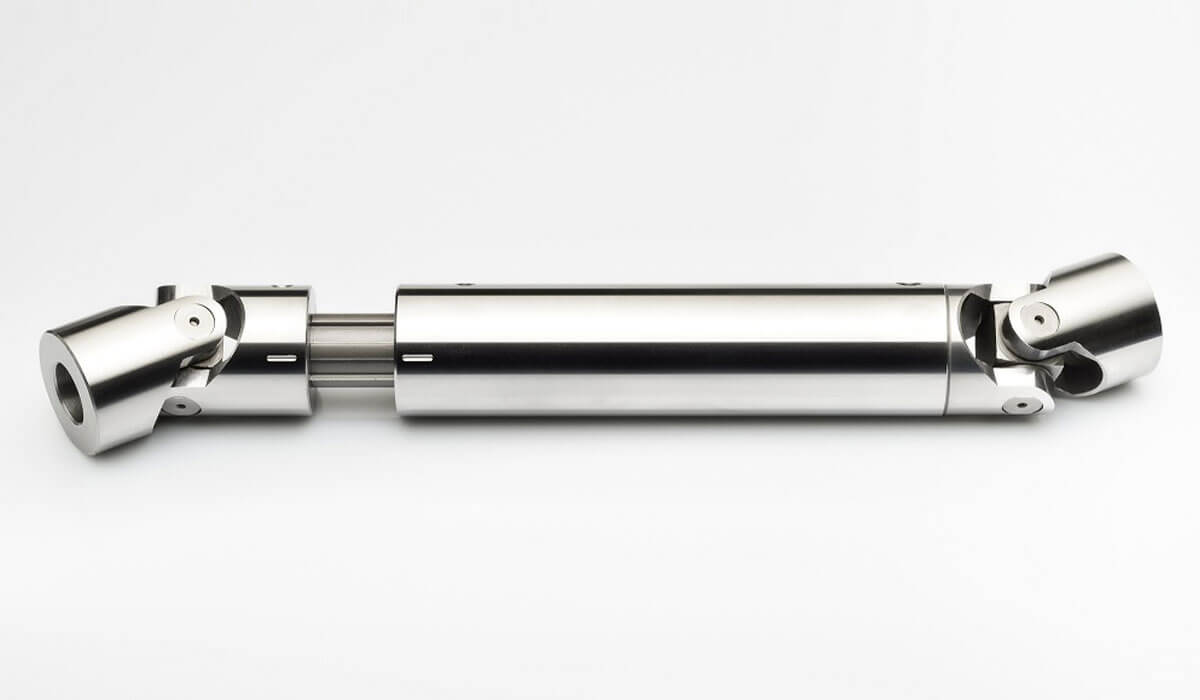
Can universal joints be used in aerospace and aviation applications?
Yes, universal joints can be used in aerospace and aviation applications, albeit their usage is limited and specific to certain systems. Here’s a detailed explanation:
Aerospace and aviation industries often require precise and reliable mechanical systems to ensure the safe and efficient operation of various components and subsystems. While universal joints are widely used in many industries, their application in aerospace and aviation is more limited due to the stringent requirements and specific conditions of these fields.
Here are some key points to consider regarding the use of universal joints in aerospace and aviation applications:
- Control Systems: Universal joints can be employed in control systems within aircraft and spacecraft. These control systems involve the transmission of motion and rotation between different components or surfaces. Universal joints can provide flexibility and enable the adjustment of control surfaces such as rudders, ailerons, or flaps, allowing for precise control of the aircraft’s movement.
- Instrumentation and Testing: Universal joints can be utilized in instrumentation and testing equipment used in aerospace and aviation. These applications often require the transmission of rotational motion and torque to various sensors, actuators, or measuring devices. Universal joints can facilitate the required motion transfer while compensating for misalignment or angular variations, ensuring accurate data acquisition and reliable testing results.
- Spacecraft Deployment Mechanisms: In space exploration missions, universal joints can be employed in deployment mechanisms. These mechanisms are responsible for deploying antennas, solar panels, or other components of spacecraft once they reach their destination. Universal joints can accommodate the complex motion and alignment requirements during the deployment process, ensuring smooth and controlled extension of these critical components.
- Engine Accessories: Universal joints can be utilized in certain engine accessories or auxiliary systems in aerospace and aviation. These may include fuel pumps, generators, or hydraulic systems. Universal joints can transmit rotational motion and torque from the engine to these accessories, allowing them to operate efficiently and reliably.
- Cautions and Limitations: The usage of universal joints in aerospace and aviation applications requires careful consideration of factors such as weight, space constraints, reliability, and safety. These industries have strict regulations and standards to ensure the highest levels of performance and safety. Therefore, the selection, integration, and testing of universal joints must be performed in accordance with the specific requirements and guidelines provided by the regulatory authorities and industry best practices.
In summary, while universal joints have limited application in aerospace and aviation, they can be utilized in control systems, instrumentation and testing, spacecraft deployment mechanisms, and engine accessories. Careful consideration of the specific requirements, regulations, and safety standards is essential when incorporating universal joints into aerospace and aviation systems to ensure optimal performance and reliability.
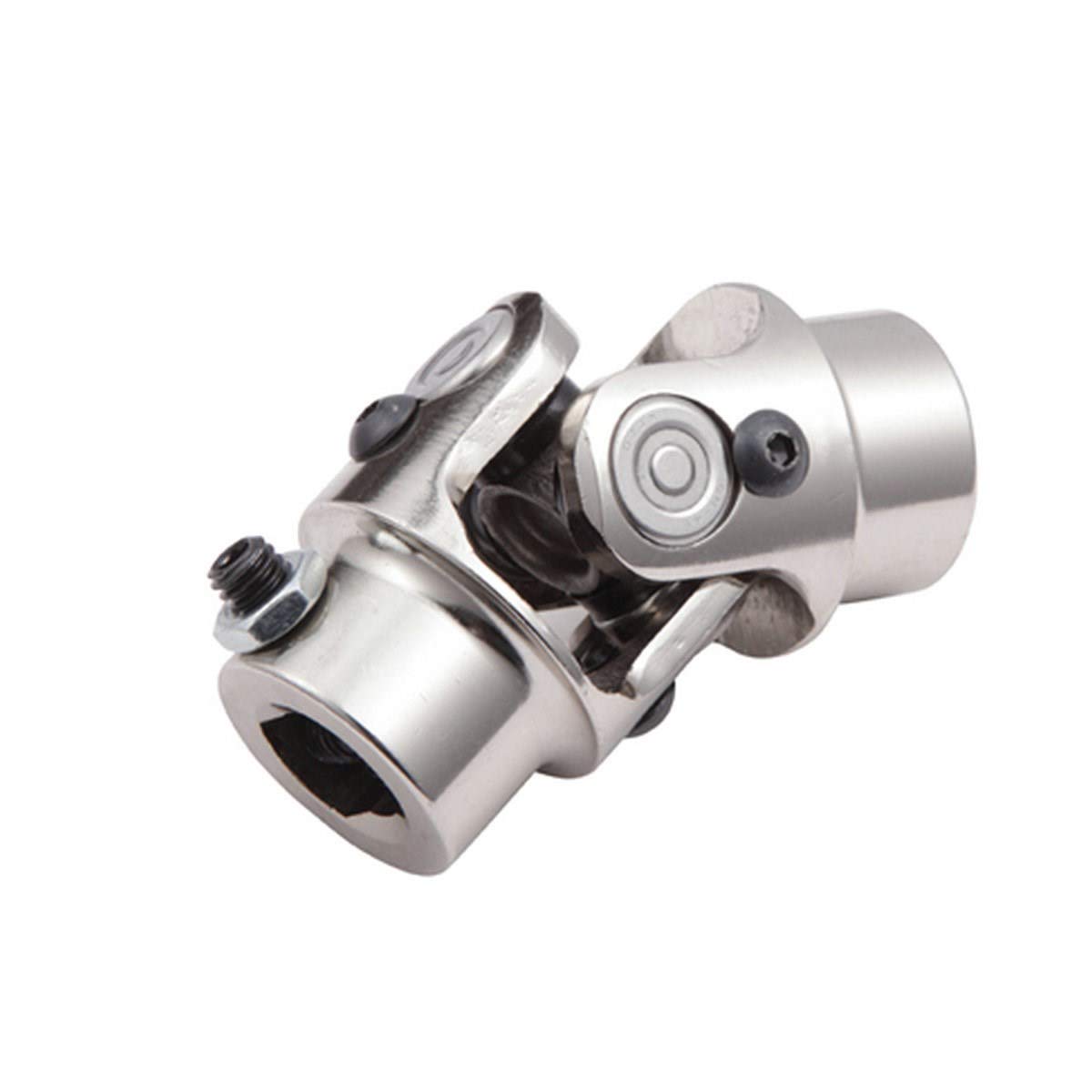
What is the lifespan of a typical universal joint?
The lifespan of a typical universal joint can vary depending on several factors. Here’s a detailed explanation:
The lifespan of a universal joint depends on various factors, including the quality of the joint, operating conditions, maintenance practices, and the specific application. While it is challenging to provide an exact lifespan, considering the following factors can help estimate the longevity of a universal joint:
- Quality and Materials: The quality of the universal joint and the materials used in its construction play a significant role in determining its lifespan. High-quality joints made from durable materials, such as alloy steels or stainless steels, tend to have longer lifespans compared to lower-quality or less robust joints made from inferior materials.
- Operating Conditions: The operating conditions in which the universal joint is used can significantly impact its lifespan. Factors such as torque levels, rotational speed, angular misalignment, vibration, temperature, and exposure to contaminants can all affect the joint’s performance and longevity. Operating the joint within its specified limits, avoiding excessive or extreme conditions, and providing proper maintenance can help extend its lifespan.
- Maintenance Practices: Regular maintenance is essential for maximizing the lifespan of a universal joint. Proper lubrication, periodic inspection for wear or damage, and timely replacement of worn components can help prevent premature failure. Adhering to the manufacturer’s recommended maintenance schedule and guidelines is crucial to ensure optimal performance and longevity.
- Application Requirements: The specific application requirements and demands placed on the universal joint influence its lifespan. Heavy-duty applications with high torque, frequent load fluctuations, or extreme operating conditions may result in increased stress and wear on the joint, potentially shortening its lifespan. Selecting a universal joint that is specifically designed and rated for the application’s requirements can help ensure a longer lifespan.
Given these factors, it is challenging to provide a precise lifespan for a typical universal joint. In some applications with proper maintenance and suitable operating conditions, a universal joint can last for several years. However, in demanding or harsh operating environments, or if subjected to excessive loads or misalignment, the lifespan of the joint may be shorter, requiring more frequent replacements.
It’s important to consult the manufacturer’s guidelines and recommendations for the specific universal joint being used, as they can provide more accurate information regarding its expected lifespan under different operating conditions. Additionally, monitoring the joint’s performance, conducting regular inspections, and addressing any signs of wear or deterioration can help identify the need for replacement and ensure safe and reliable operation.
Are there different types of universal joints available?
Yes, there are different types of universal joints available to suit various applications and requirements. Let’s explore some of the commonly used types:
- Single Joint (Cardan Joint): The single joint, also known as a Cardan joint, is the most basic and widely used type of universal joint. It consists of two yokes connected by a cross-shaped center piece. The yokes are typically 90 degrees out of phase with each other, allowing for angular displacement and misalignment between shafts. Single joints are commonly used in automotive drivelines and industrial applications.
- Double Joint: A double joint, also referred to as a double Cardan joint or a constant velocity joint, is an advanced version of the single joint. It consists of two single joints connected in series with an intermediate shaft in between. The use of two joints in series helps to cancel out the velocity fluctuations and reduce vibration caused by the single joint. Double joints are commonly used in automotive applications, especially in front-wheel-drive vehicles, to provide constant velocity power transmission.
- Tracta Joint: The Tracta joint, also known as a tripod joint or a three-roller joint, is a specialized type of universal joint. It consists of three rollers or balls mounted on a spider-shaped center piece. The rollers are housed in a three-lobed cup, allowing for flexibility and articulation. Tracta joints are commonly used in automotive applications, particularly in front-wheel-drive systems, to accommodate high-speed rotation and transmit torque smoothly.
- Rzeppa Joint: The Rzeppa joint is another type of constant velocity joint commonly used in automotive applications. It features six balls positioned in grooves on a central sphere. The balls are held in place by an outer housing with an inner race. Rzeppa joints provide smooth power transmission and reduced vibration, making them suitable for applications where constant velocity is required, such as drive axles in vehicles.
- Thompson Coupling: The Thompson coupling, also known as a tripodal joint, is a specialized type of universal joint. It consists of three interconnected rods with spherical ends. The arrangement allows for flexibility and misalignment compensation. Thompson couplings are often used in applications where high torque transmission is required, such as industrial machinery and power transmission systems.
These are just a few examples of the different types of universal joints available. Each type has its own advantages and is suitable for specific applications based on factors such as torque requirements, speed, angular displacement, and vibration reduction. The selection of the appropriate type of universal joint depends on the specific needs of the application.


editor by CX 2023-11-13