Product Description
U joint of SWC Medium-Duty Cardan Shaft
Packaging & Delivery
Packaging details:Standard plywood case
Delivery detail: 15 -20 working days,depend on the actual produce condition
FAQ
Q1: What is the location of your company?
A1: Our company is located in the HangZhou City ,ZheJiang ,China.Welcome to visit our factory at anytime!
Q2: How does your factory do regarding quality control?
A2: Our standard QC system to control quality.
Q3: What is your delivery time?
A3: Usually within 25 days after the receipt of payment.Delivery time must depend on the actual produce condition.
Q4: What are your strengths?
A4: 1.We are the manufacturer,having competitive advantage in price.
2.A large part of money is put into advancing CNC equipments and product
R&D department annual,the performance of cardan shaft can be guaranteed.
3.About quality issues or follow-up after-sales service,we report directly to the boss.
4.We have the ambitions to exploring and developing the world’s cardan shaft market and
we believe we can.
Brief Introduction
Processing flow
Applications
Quality Control
/* March 10, 2571 17:59:20 */!function(){function s(e,r){var a,o={};try{e&&e.split(“,”).forEach(function(e,t){e&&(a=e.match(/(.*?):(.*)$/))&&1
| Condition: | New |
|---|---|
| Color: | Silver |
| Certification: | ISO |
| Structure: | Single |
| Material: | Alloy Steel |
| Type: | Cross |
| Customization: | Available | Customized Request |
|---|
Can universal joints be used in both horizontal and vertical orientations?
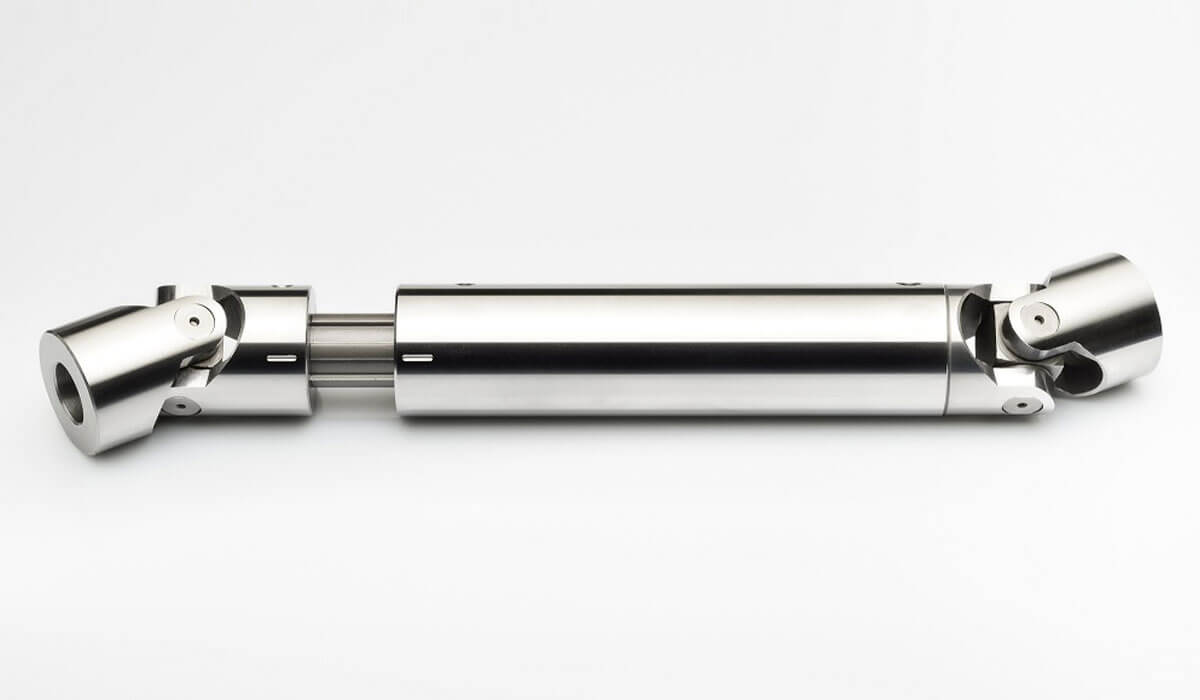
Yes, universal joints can be used in both horizontal and vertical orientations. Here’s a detailed explanation:
Universal joints are mechanical devices designed to transmit rotary motion between two shafts that are not in a straight line alignment. They consist of a cross-shaped or H-shaped yoke with bearings at each end that connect to the shafts. The design of universal joints allows them to accommodate angular misalignment between the shafts, making them suitable for various applications, including both horizontal and vertical orientations.
When used in a horizontal orientation, universal joints can transmit rotational motion between shafts that are positioned at different angles or offsets. They are commonly found in drivetrain systems of vehicles, where they transfer power from the engine to the wheels, even when the drivetrain components are not perfectly aligned. In this configuration, universal joints can effectively handle the torque requirements and misalignment caused by uneven terrain, suspension movement, or steering angles.
In a vertical orientation, universal joints can also be utilized to transfer rotational motion between shafts that are positioned vertically. This arrangement is often seen in applications such as industrial equipment, machinery, or agricultural implements. For example, in a vertical power transmission system, a universal joint can be used to connect a vertical driving shaft to a vertical driven shaft, enabling power transfer and accommodating any angular misalignment that may occur due to variations in shaft positions or vibrations.
It’s important to note that the specific design and selection of universal joints for different orientations should consider factors such as the torque requirements, operating conditions, and the manufacturer’s specifications. The orientation of the universal joint may affect factors such as lubrication, load-bearing capacity, and the need for additional support or stabilization mechanisms.
In summary, universal joints can be used in both horizontal and vertical orientations. Their ability to accommodate angular misalignment makes them versatile components for transmitting rotary motion between shafts that are not in a straight line alignment, regardless of the orientation.
Can universal joints be used in heavy-duty machinery and equipment?
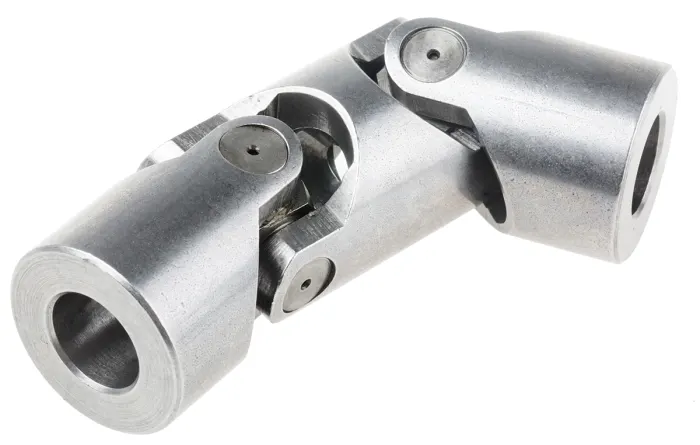
Yes, universal joints can be used in heavy-duty machinery and equipment. Here’s a detailed explanation:
Universal joints are widely employed in various industrial applications, including heavy-duty machinery and equipment. They offer several advantages that make them suitable for such applications:
- Flexibility: Universal joints are designed to transmit torque and accommodate angular misalignment between shafts. This flexibility allows for the transmission of power even when the shafts are not perfectly aligned, which is often the case in heavy-duty machinery where misalignment can occur due to structural deflection, thermal expansion, or other factors.
- Torque Transmission: Universal joints are capable of transmitting significant amounts of torque. The torque capacity of a universal joint depends on factors such as its size, design, and the materials used. In heavy-duty machinery, where high torque levels are common, appropriately sized and robust universal joints can effectively handle the required torque transmission.
- Compactness: Universal joints are compact in design, allowing them to be integrated into tight spaces within machinery and equipment. Their compactness enables efficient power transmission in applications where space constraints are a concern.
- Durability: Universal joints can be manufactured from materials that provide high strength and durability, such as alloy steels or stainless steels. This durability allows them to withstand heavy loads, harsh operating conditions, and repetitive motion, making them suitable for heavy-duty machinery and equipment.
- Cost-Effectiveness: Universal joints are often a cost-effective solution for torque transmission in heavy-duty machinery. Compared to alternative power transmission methods, such as gearboxes or direct drives, universal joints can offer a more economical option while still providing adequate performance and reliability.
However, it’s important to consider the specific requirements and operating conditions of the heavy-duty machinery when selecting and implementing universal joints. Factors such as the torque levels, rotational speed, angular misalignment, operating temperature, and maintenance practices should be carefully evaluated to ensure that the chosen universal joints are appropriately sized, rated, and maintained for reliable and safe operation.
In summary, universal joints can indeed be used in heavy-duty machinery and equipment. Their flexibility, torque transmission capabilities, compactness, durability, and cost-effectiveness make them a viable choice for power transmission in a wide range of heavy-duty applications.
What is a universal joint and how does it work?
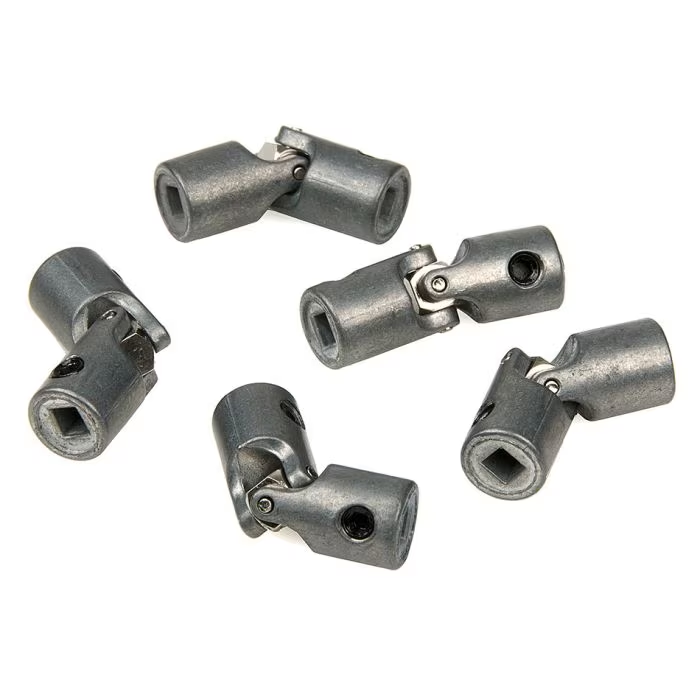
A universal joint, also known as a U-joint, is a mechanical coupling that allows for the transmission of rotary motion between two shafts that are not in line with each other. It is commonly used in applications where shafts need to transmit motion at angles or around obstacles. The universal joint consists of a cross-shaped or H-shaped yoke with bearings at the ends of each arm. Let’s explore how it works:
A universal joint typically comprises four main components:
- Input Shaft: The input shaft is the shaft that provides the initial rotary motion.
- Output Shaft: The output shaft is the shaft that receives the rotary motion from the input shaft.
- Yoke: The yoke is a cross-shaped or H-shaped component that connects the input and output shafts. It consists of two arms perpendicular to each other.
- Bearings: Bearings are located at the ends of each arm of the yoke. These bearings allow for smooth rotation and reduce friction between the yoke and the shafts.
When the input shaft rotates, it causes the yoke to rotate along with it. Due to the perpendicular arrangement of the arms, the output shaft connected to the other arm of the yoke experiences rotary motion at an angle to the input shaft.
The universal joint works by accommodating the misalignment between the input and output shafts. As the input shaft rotates, the yoke allows the output shaft to rotate freely and continuously despite any angular displacement or misalignment between the two shafts. This flexibility of the universal joint enables torque to be transmitted smoothly between the shafts while compensating for their misalignment.
During operation, the bearings at the ends of the yoke arms allow for the rotation of the yoke and the connected shafts. The bearings are often enclosed within a housing or cross-shaped cap to provide protection and retain lubrication. The design of the bearings allows for a range of motion and flexibility, allowing the yoke to move and adjust as the shafts rotate at different angles.
The universal joint is commonly used in various applications, including automotive drivelines, industrial machinery, and power transmission systems. It allows for the transmission of rotary motion at different angles and helps compensate for misalignment, eliminating the need for perfectly aligned shafts.
It is important to note that universal joints have certain limitations. They introduce a small amount of backlash or play, which can affect precision and accuracy in some applications. Furthermore, at extreme angles, the operating angles of the universal joint may become limited, potentially causing increased wear and reducing its lifespan.
Overall, the universal joint is a versatile mechanical coupling that enables the transmission of rotary motion between misaligned shafts. Its ability to accommodate angular displacement and misalignment makes it a valuable component in numerous mechanical systems.


editor by CX 2023-12-21