Product Description
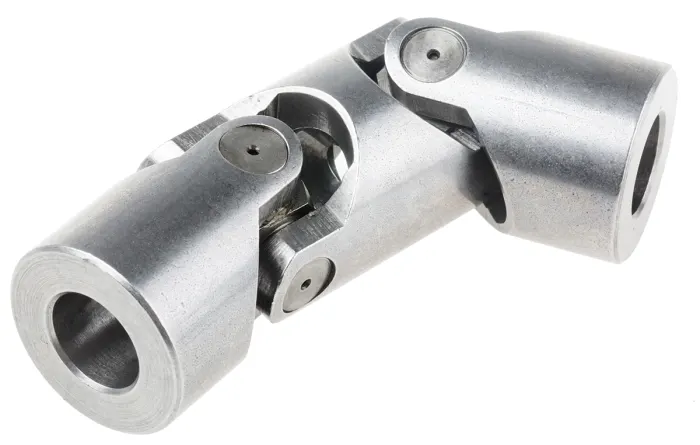
Zinc alloy cardan joint,work with AF.RF handle:
| Type: | RS-UJ05 |
| Length: | 350mm,we could produce the length as per request. |
| Material: | Zinc alloy |
| Color: | Silver |
Rollmax shutter component Co.,Ltd estabalised in 2012, is a professional roller shutter component manufacturer specialized in innovation,developing,designing and producing all kinds of the roller shutter,roller door,garage door,awnings,roller blinds accessories and other related products for manual and motorized system.
Main products like aluminium side frame,cover box,handles,cardan joint,plastic and metal caps,galvanized tube,crank wheel,coiler,switch also the complete roller shutter set.
Our workshop line introduced advanced technology, imported advanced equipment,with the plastic injection machine,aluminium die casting machine,galvanized
tube machine and punching machine.all products with high quality and competitive price.
Employs experienced technical and management personnel,features high technical capabilities and strictly quality control procedures.
Goods sell well in Europe,Middle east,Australia,North and South America market with good reputation.
We located in HangZhou,China,an important economic hub and port city
,convenient for sea and air transportation from HangZhou or ZheJiang .
Which is a a fast-growing city.as well the center of the mechanical and electronic industry,has the big advantage for the home automation system.
With the efforts and supports of all our employees, we will do our best to provide our customers with more high-quality products and more efficient service.
We stick to the principle of “quality first, service first, continuous improvement and innovation to meet the customers” for the management and “zero defect, zero complaints” as the quality objective.
Our mission is “Integrity and innovation are the soul and spirit.”
Welcome to visit us CHINAMFG shutter component!
| Type: | Cardan Joint |
|---|---|
| Material: | Zinc Alloy |
| Transport Package: | 50PCS/Carton |
| Specification: | 350mm |
| Trademark: | rollmax |
| Origin: | China |
| Samples: | US$ 5/Piece 1 Piece(Min.Order) | |
|---|
| Customization: | Available | Customized Request |
|---|
Can universal joints be used in marine and offshore applications?
Yes, universal joints can be used in marine and offshore applications. Here’s a detailed explanation:
Marine and offshore environments present unique challenges in terms of harsh operating conditions, exposure to saltwater, vibrations, and high torque requirements. Universal joints offer several advantages that make them suitable for use in these demanding applications.
1. Misalignment Compensation: Marine and offshore systems often require the transmission of rotary motion between misaligned shafts due to the dynamic nature of the environment. Universal joints excel at compensating for angular misalignment, allowing for smooth power transmission even when the shafts are not perfectly aligned.
2. Torque Transmission: Universal joints are capable of handling high torque loads, which is crucial in marine and offshore applications. They can efficiently transfer power between the main engine or motor and various equipment, such as propellers, winches, pumps, or generators.
3. Compact Design: Space is often limited in marine and offshore systems, and universal joints offer a compact design compared to alternative methods of transmitting motion between misaligned shafts, such as gearboxes or flexible couplings. This compactness allows for more efficient use of available space.
4. Corrosion Resistance: Marine and offshore environments are highly corrosive due to the presence of saltwater and other corrosive agents. Universal joints can be designed and manufactured using materials that exhibit excellent corrosion resistance, such as stainless steel or non-corroding alloys, to ensure long-term performance and reliability in these environments.
5. Sealing and Lubrication: Proper sealing and lubrication are critical in marine and offshore applications to protect the universal joint’s internal components from water ingress and corrosion. Specialized sealing mechanisms, such as lip seals or labyrinth seals, can be implemented to prevent water intrusion, while effective lubrication systems ensure smooth operation and reduce wear.
6. Shock and Vibration Resistance: Marine and offshore equipment are subjected to significant shock and vibration loads due to wave motion, vessel movement, or equipment operation. Universal joints are designed to withstand these dynamic forces and provide reliable power transmission in such conditions. The use of high-quality bearings, robust construction, and proper balancing contribute to their resilience against shock and vibration.
7. Customization: Universal joints can be customized to suit specific marine and offshore applications. Manufacturers can tailor the design and materials to meet unique requirements, such as high-speed operation, extreme temperature variations, or specific size constraints. Customization ensures that the universal joints are optimized for their intended use, maximizing their performance and reliability.
When utilizing universal joints in marine and offshore applications, it is crucial to consider factors such as load requirements, environmental conditions, maintenance procedures, and compliance with relevant industry standards and regulations. Regular inspection, maintenance, and proper lubrication are necessary to ensure the longevity and reliable operation of universal joints in these challenging environments.
In summary, universal joints can be effectively used in marine and offshore applications due to their ability to compensate for misalignment, handle high torque loads, compact design, corrosion resistance, sealing and lubrication capabilities, shock and vibration resistance, and customization options. The selection and design of universal joints should consider the specific requirements and challenges associated with marine and offshore environments to ensure optimal performance and reliability.
What are the signs of a failing universal joint and how do you diagnose it?
Diagnosing a failing universal joint involves identifying specific signs and symptoms that indicate potential problems. Here’s a detailed explanation:
A failing universal joint can exhibit several signs that indicate a need for inspection, repair, or replacement. Some common signs of a failing universal joint include:
- Clunking or Knocking Noise: One of the most noticeable signs is a clunking or knocking noise coming from the universal joint area. This noise is often more pronounced during acceleration, deceleration, or when changing gears. The noise may indicate excessive play or wear in the joint’s components.
- Vibration: A failing universal joint can cause vibrations that are felt throughout the vehicle. These vibrations may be more noticeable at higher speeds or under load conditions. The vibrations can be a result of imbalanced driveshafts or misaligned yokes due to worn or damaged universal joint bearings.
- Difficulty in Power Transfer: As a universal joint deteriorates, power transfer from the transmission to the driven wheels may become less efficient. This can lead to a decrease in acceleration, reduced towing capacity, or difficulty in maintaining consistent speed. Loss of power transfer efficiency can occur due to worn or seized universal joint components.
- Visible Wear or Damage: A visual inspection of the universal joint can reveal signs of wear or damage. Look for excessive play or movement in the joint, rust or corrosion on the components, cracked or broken yokes, or worn-out bearings. Any visible signs of damage indicate a potential issue with the universal joint.
- Grease Leakage: Universal joints are typically lubricated with grease to reduce friction and wear. If you notice grease leakage around the joint or on the surrounding components, it may indicate a failing seal or a damaged bearing, which can lead to joint failure.
To diagnose a failing universal joint, the following steps can be taken:
- Perform a visual inspection: Inspect the universal joint and surrounding components for any visible signs of wear, damage, or leakage. Pay attention to the condition of the yokes, bearings, seals, and grease fittings.
- Check for excessive play: While the vehicle is on a level surface and the parking brake is engaged, attempt to move the driveshaft back and forth. Excessive play or movement in the universal joint indicates wear or looseness.
- Listen for abnormal noises: During a test drive, listen for any clunking, knocking, or unusual noises coming from the universal joint area. Pay attention to noise changes during acceleration, deceleration, and gear changes.
- Monitor vibrations: Note any vibrations felt through the vehicle, especially at higher speeds or under load conditions. Excessive vibrations can indicate problems with the universal joint or driveshaft.
- Seek professional inspection: If you suspect a failing universal joint but are uncertain about the diagnosis, it’s recommended to consult a professional mechanic or technician with experience in drivetrain systems. They can perform a comprehensive inspection, including measurements and specialized tests, to accurately diagnose the condition of the universal joint.
It’s important to address any signs of a failing universal joint promptly to avoid further damage, drivability issues, or potential safety hazards. Regular maintenance, including periodic inspection and lubrication, can help prevent premature universal joint failure.
In summary, signs of a failing universal joint include clunking or knocking noises, vibrations, difficulty in power transfer, visible wear or damage, and grease leakage. Diagnosing a failing universal joint involves visual inspection, checking for excessive play, listening for abnormal noises, monitoring vibrations, and seeking professional inspection when necessary.
What are the potential limitations or drawbacks of using universal joints?
While universal joints offer several advantages in transmitting torque between non-aligned or angularly displaced shafts, they also have some limitations and drawbacks to consider. Here are some potential limitations of using universal joints:
- Angular limitations: Universal joints have specific angular limits within which they can operate efficiently. If the angle between the input and output shafts exceeds these limits, it can lead to increased wear, vibration, and decreased power transmission efficiency. Operating a universal joint at extreme angles or near its angular limits can result in premature failure or reduced service life.
- Backlash and play: Universal joints can have inherent backlash and play due to the design and clearance between the components. This can result in a loss of precision in torque transmission, especially in applications that require accurate positioning or minimal rotational play.
- Maintenance and lubrication: Universal joints require regular maintenance and proper lubrication to ensure their optimal performance and longevity. Failing to adhere to the recommended lubrication intervals or using inadequate lubricants can lead to increased friction, wear, and potential joint failure.
- Limited misalignment compensation: While universal joints can accommodate some misalignment between the input and output shafts, they have limitations in compensating for large misalignments. Excessive misalignment can cause increased stress, wear, and potential binding or seizure of the joint.
- Non-constant velocity: Standard universal joints, also known as Cardan joints, do not provide constant velocity output. As the joint rotates, the output shaft speed fluctuates due to the changing angular velocity caused by the joint’s design. Applications that require constant velocity output may necessitate the use of alternative joint types, such as constant velocity (CV) joints.
- Limitations in high-speed applications: Universal joints may not be suitable for high-speed applications due to the potential for vibration, imbalance, and increased stress on the joint components. At high rotational speeds, the joint’s limitations in balance and precision can become more pronounced, leading to reduced performance and potential failure.
- Space and weight considerations: Universal joints require space to accommodate their design, including the yokes, cross, and bearings. In compact or weight-conscious applications, the size and weight of the universal joint may pose challenges, requiring careful design considerations and trade-offs.
It’s important to evaluate these limitations and drawbacks in the context of the specific application and system requirements. In some cases, alternative power transmission solutions, such as flexible couplings, CV joints, gearboxes, or direct drives, may be more suitable depending on the desired performance, efficiency, and operating conditions.


editor by CX 2023-11-18