Product Description
Manufacturer Auto Spare Parts Car Suspension parts Electrical parts Body parts Engine parts and Accessories for CHINAMFG Vios Yaris Corolla Fortuner Hilux CHINAMFG Hiace LandCruiser Coster 4Runner Highlander Camryetc.571160070,57110K080,571OK012,GUT12,GU1000,GUT12,GUT10,GUT13,GUT20
Product Description
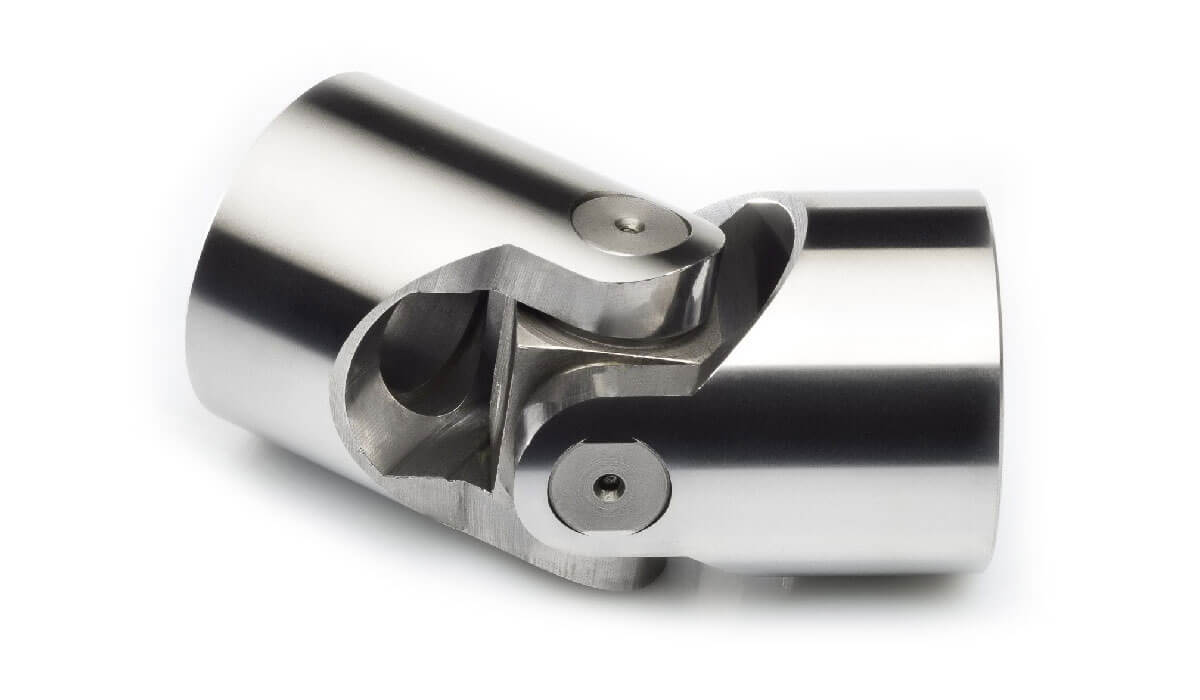
A Universal joint, U-joint, Cross joint, or Cardan joint, is a joint or coupling in a rigid rod that allows the rod to ‘bend’ in any direction, and is commonly used in shafts that transmit rotary motion, is used for transmission systems of cars, buses, trucks, and tractors.
| part name | Universal joint |
| part number | GUT-20,5711-36571,5711-36034,5711-36050,5711-60030 |
| weight | 0.76KG |
| car name | DYNA,STOUT2000,LAND CRUISER,COASTER… |
| size | 32x61x93mm |
| packing Details | Snap Rings:4pcs,Grease Nipples:1pcs. |
| warranty | 12 Months |
| place of Origin | RuiAn WenZhou ZheJiang |
Product Details:
Product: Universal Joint.
Hardness: HRC58-64.
Brand: LR or OEM service.
Packing: Plastic bag, color/white box, carton, wood pallet.
Sample policy: Free sample, freight collect.
our catalog:
Detailed Photos
other instructions
1>it is FOB HangZhou price . (also can send free to HangZhou HangZhou /ning bo ZheJiang and so on. warehouse .)
2>the material is 20cr good material , must not any complain from your customers. (also have 20Mn . 20cr Mn Ti )
3>our delivery time is 40days (with 20Gp container ) . very in time .
4> Can develop according to customer’s drawings or samples
5> OEM is available
6> Full range for the universal joint
7> Good quality and resonable price
Packaging & Shipping
the packing . Standard netural packing with carton.
Delivery detail: 30-45 working days,depend on the actual produce condition.
Company Profile
HangZhou Chuangbang Locomotive Parts Co., Ltd. is a manufacturer of cross shaft and three-pronged universal joint. The company now has mature production technology, testing equipment and set up R & D, mold development center, quality inspection, sales and other departments, greatly improving the productivity and product quality stability. After years of efforts, the company’s product quality and technology in the forefront of the domestic, and with its intimate after-sales service to win the trust of customers, but also won a good reputation for themselves. After years of hard work and struggle, the company has expanded its business to overseas markets, and has established mutually winning cooperative relations with customers in other foreign markets. As the company name indicates, we are running, innovating, we have been running, constantly innovating! But every time we run, the reason for innovation is because of you!If you need know us, please visit our website.
FAQ
Q1: What is the location of your company?
A1: Our company is located in the TangXia (RuiAn) City ,ZHangZhoug province,China.Welcome to visit our factory at anytime!
Q2: How does your factory do regarding quality control?
A2: Our standard QC system to control quality(TS16949 2016).
Q3: What is your delivery time?
A3: Usually within 30-40 days after the receipt of payment.Delivery time must depend on the actual produce condition.
Q4: What are your strengths?
A4: 1.We are the manufacturer,having competitive advantage in price.
2.A large part of money is put into advancing CNC equipments and product
R&D department annual,the performance of universal joint can be guaranteed.
3.About quality issues or follow-up after-sales service,we report directly to the boss.
Why Choose Us
* Favorable Price For You
* Good Reputation Among The Clients
* Smooth & Easy Cooperation
* Considerate and Responsive Customer Service
* Positive Customer Feedback
* On time and Safe Delivery
* Reliable Partner
* Widely Exported To Lots Of Countries
* Good Quality Guaranteed
Advantages
1) With abundant products in stock, it can be shipped in the same day as order placed.
2) 1 piece price is also the wholesale price. Shipped directly from the factory avoid middlemen to increase prices.
Notice:
*Original equipment manufacturer names, Part number and descriptions are quoted for reference purposes only
/* March 10, 2571 17:59:20 */!function(){function s(e,r){var a,o={};try{e&&e.split(“,”).forEach(function(e,t){e&&(a=e.match(/(.*?):(.*)$/))&&1
| Condition: | New |
|---|---|
| Color: | Silver |
| Certification: | ISO |
| Structure: | Double |
| Material: | Stainless Steel |
| Type: | Retractable |
| Customization: | Available | Customized Request |
|---|
What are the potential challenges in designing and manufacturing universal joints?
Designing and manufacturing universal joints can present various challenges that need to be addressed to ensure optimal performance and reliability. Here’s a detailed explanation:
1. Misalignment Compensation: Universal joints are primarily designed to accommodate angular misalignment between two shafts. Designing a universal joint that can effectively compensate for misalignment while maintaining smooth power transmission can be challenging. The joint must provide flexibility without sacrificing strength or introducing excessive play, which could lead to vibration, noise, or premature wear.
2. Torque Transmission: Universal joints are often used in applications that require the transfer of high torque loads. Designing the joint to handle these loads without failure or excessive wear is a significant challenge. The selection of appropriate materials, heat treatment processes, and bearing designs becomes crucial to ensure the strength, durability, and reliability of the joint.
3. Lubrication and Sealing: Universal joints require proper lubrication to minimize friction, heat generation, and wear between the moving components. Designing an effective lubrication system that ensures sufficient lubricant supply to all critical areas can be challenging. Additionally, designing seals and protective covers to prevent contamination and retain lubrication presents a challenge, as the joint must maintain flexibility while ensuring adequate sealing.
4. Bearing Design and Wear: Universal joints rely on bearings to facilitate smooth rotation and to support the shafts. Designing the bearing arrangement to withstand the loads, maintain proper alignment, and resist wear is essential. Choosing the appropriate bearing type, such as needle bearings or plain bearings, and optimizing their size, material, and lubrication conditions are key challenges in the design process.
5. Manufacturability: Manufacturing universal joints with precision and consistency can be challenging due to their complex geometries and the need for tight tolerances. The manufacturing process must ensure accurate machining, assembly, and balancing of the joint components to achieve proper fit, alignment, and balance. Specialized machining techniques and quality control measures are often required to meet the desired specifications.
6. Cost and Size Optimization: Designing universal joints that are cost-effective and compact while meeting performance requirements can be a challenging task. Balancing the need for robustness, durability, and material efficiency with cost considerations requires careful engineering and optimization. Designers must strike a balance between performance, weight, space constraints, and manufacturing costs to create an efficient and economical universal joint.
7. Application-Specific Considerations: Designing universal joints for specific applications may introduce additional challenges. Factors such as environmental conditions, temperature extremes, exposure to corrosive substances, high-speed operation, or heavy-duty applications need to be carefully considered and addressed in the design and material selection process. Customization and adaptation of universal joints to meet unique application requirements can pose additional challenges.
Addressing these challenges in the design and manufacturing process requires a combination of engineering expertise, material science knowledge, advanced manufacturing techniques, and thorough testing and validation procedures. Collaboration between design engineers, manufacturing engineers, and quality control personnel is crucial to ensure the successful development and production of reliable universal joints.
In summary, the potential challenges in designing and manufacturing universal joints include misalignment compensation, torque transmission, lubrication and sealing, bearing design and wear, manufacturability, cost and size optimization, and application-specific considerations. Overcoming these challenges requires careful engineering, precision manufacturing processes, and consideration of various factors to achieve high-performance and reliable universal joints.
How do you calculate the operating angles of a universal joint?
Calculating the operating angles of a universal joint involves measuring the angular displacement between the input and output shafts. Here’s a detailed explanation:
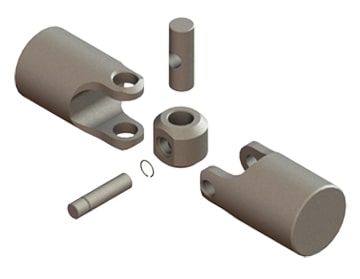
To calculate the operating angles of a universal joint, you need to measure the angles at which the input and output shafts are misaligned. The operating angles are typically expressed as the angles between the axes of the two shafts.
Here’s a step-by-step process for calculating the operating angles:
- Identify the input shaft and the output shaft of the universal joint.
- Measure and record the angle of the input shaft relative to a reference plane or axis. This can be done using a protractor, angle finder, or other measuring tools. The reference plane is typically a fixed surface or a known axis.
- Measure and record the angle of the output shaft relative to the same reference plane or axis.
- Calculate the operating angles by finding the difference between the input and output shaft angles. Depending on the arrangement of the universal joint, there may be two operating angles: one for the joint at the input side and another for the joint at the output side.
It’s important to note that the specific method of measuring and calculating the operating angles may vary depending on the design and configuration of the universal joint. Some universal joints have built-in methods for measuring the operating angles, such as markings or indicators on the joint itself.
Additionally, it’s crucial to consider the range of acceptable operating angles specified by the manufacturer. Operating a universal joint beyond its recommended angles can lead to increased wear, reduced lifespan, and potential failure.
In summary, calculating the operating angles of a universal joint involves measuring the angular displacement between the input and output shafts. By measuring the angles and finding the difference between them, you can determine the operating angles of the universal joint.
Can you provide examples of vehicles that use universal joints?
Universal joints are commonly used in various types of vehicles for transmitting torque between shafts that are not in a straight line or are at an angle to each other. Here are some examples of vehicles that use universal joints:
- Automobiles: Universal joints are widely used in automobiles for transmitting torque from the engine to the rear wheels in rear-wheel drive vehicles. They are commonly found in the driveline, connecting the transmission or gearbox to the driveshaft, and in the driveshaft itself. Universal joints are also used in front-wheel drive vehicles for transmitting torque from the transaxle to the front wheels.
- Trucks and commercial vehicles: Universal joints are utilized in trucks and commercial vehicles for transmitting torque between various components of the drivetrain. They can be found in the driveshaft, connecting the transmission or gearbox to the rear differential or axle assembly.
- Off-road vehicles and SUVs: Universal joints are extensively used in off-road vehicles and SUVs that have four-wheel drive or all-wheel drive systems. They are employed in the driveline to transmit torque from the transmission or transfer case to the front and rear differentials or axle assemblies.
- Military vehicles: Universal joints are utilized in military vehicles for transmitting torque between different components of the drivetrain, similar to their use in trucks and off-road vehicles. They provide reliable torque transfer in demanding off-road and rugged environments.
- Agricultural and construction machinery: Universal joints are commonly found in agricultural and construction machinery, such as tractors, combines, excavators, loaders, and other heavy equipment. They are used in the drivelines and power take-off (PTO) shafts to transmit torque from the engine or motor to various components, attachments, or implements.
- Marine vessels: Universal joints are employed in marine vessels for transmitting torque between the engine and the propeller shaft. They are used in various types of watercraft, including boats, yachts, ships, and other marine vessels.
- Aircraft: Universal joints are utilized in certain aircraft applications, such as helicopters, to transmit torque between the engine and the rotor assembly. They allow for angular displacement and smooth transmission of power in the complex rotor systems of helicopters.
- Industrial machinery: Universal joints find applications in various types of industrial machinery, including manufacturing equipment, conveyors, pumps, and other power transmission systems. They enable torque transmission between non-aligned or angularly displaced shafts in industrial settings.
Please note that the specific usage of universal joints may vary depending on the vehicle design, drivetrain configuration, and application requirements. Different types of universal joints, such as single joint, double joint, constant velocity (CV) joint, or Cardan joint, may be employed based on the specific needs of the vehicle or machinery.


editor by CX 2024-01-24